 Antigua Guatemala City Guide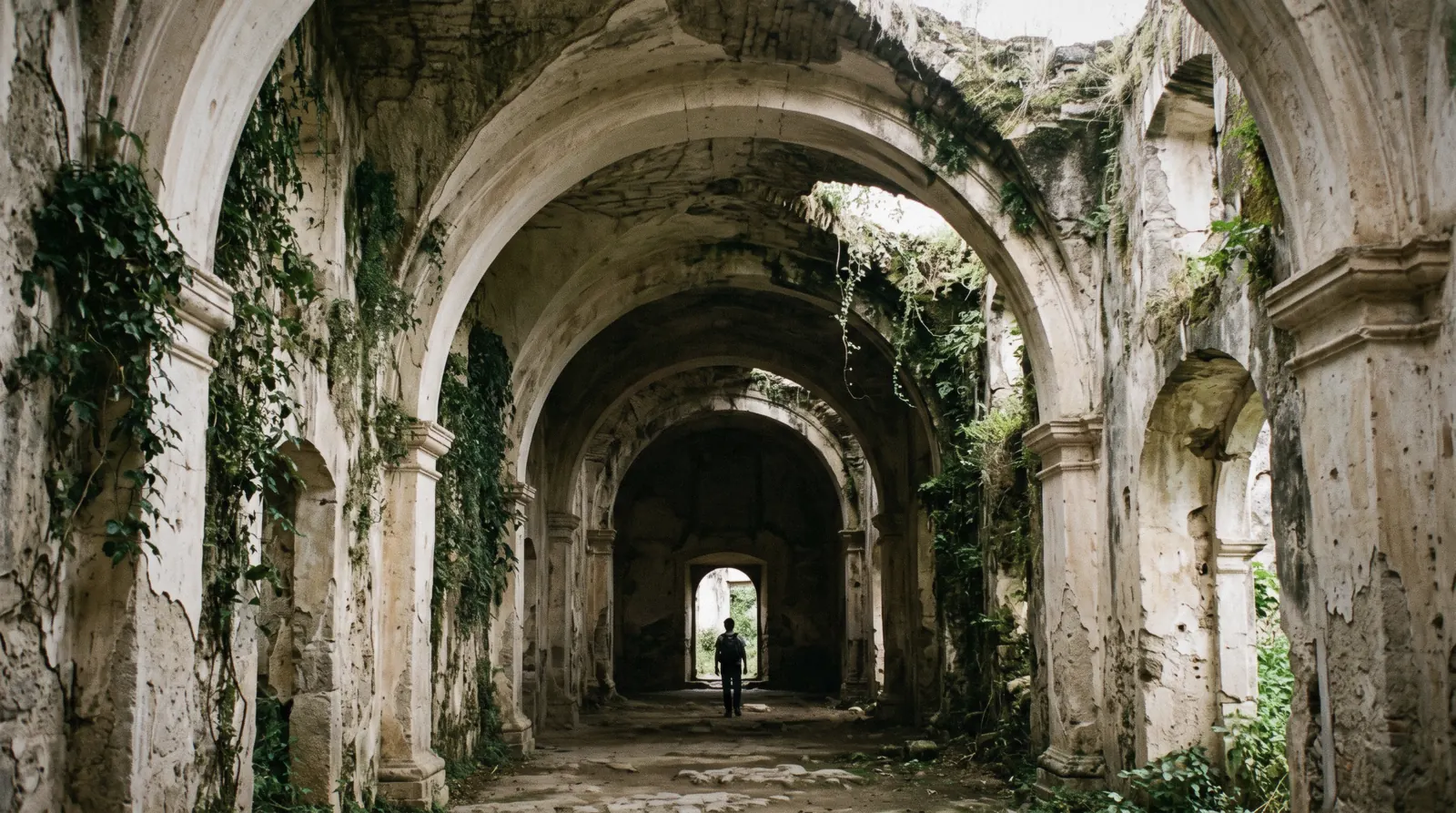
Santa Clara Ruins
The ruins of the Convento de Santa Clara are the roofless baroque nave at the quiet south end of Antigua's grid, all arches and open sky, and they carry one of the strangest biographies in the city: a convent founded in 1700, wrecked in 1717, rebuilt by Diego de Porres, opened again in 1734 and destroyed for good by the earthquakes of 1773 after only 39 years of use. This page on the convento santa clara antigua covers the visit as you will actually live it: the fee that no official source publishes, the hours nobody states, how long the ruin deserves, and how it pairs with Capuchinas and San Francisco in a single morning. For the wider trip, start from the Antigua Guatemala city guide, and if you want the story told properly, the city highlights walking tour puts the ruins in their earthquake context.
Quick answer What it is, cost, hours, worth it
The Santa Clara ruins are the roofless nave and courts of a Clarisas convent in Antigua. The foundation of the convento santa clara antigua is dated 1700, the first stone went in three years later, and after the 1717 San Miguel earthquake flattened the first monastery the whole complex was rebuilt by the architect Diego de Porres. The new baroque church opened in 1734. It lasted 39 years. The Santa Marta earthquakes of 1773 destroyed the complex almost completely and the nuns never came back. What stands today is one of the most photographed shells in the city, a long vaulted stone nave open to the sky, at the quiet south end of the grid on 2a Avenida Sur between 6a and 7a calles. The honest practical picture: no official source publishes an entry fee, opening hours or closed days. INGUAT lists the ruins on its Antigua page with no practical data at all, and the heritage council that owns the neighbouring convents has no reachable website. Spanish Wikipedia marks access as paid, so treat it as a small gate fee and carry cash in quetzales. Go in the morning, when the light falls through the roofless windows and the courtyards are quiet.
Key takeaways
- Worth it for the nave alone. This is the atmospheric ruin most visitors reach last, and it pairs naturally with /capuchinas/, the other paid convent, eight minutes north.
- The cost picture is unusual. No tariff exists online, so read the cost table before you go and consider a guided city walk that gives you the ruins in context.
- For the contrast, /san-francisco-church/ sits three minutes away. It is a working church and pilgrim shrine where Santa Clara is a silent shell.
Key facts
Opening hours
| Published hours | None. No official source publishes hours |
|---|
Closed Not stated. No official source names closed days
Admission
- Adult
- Not stated. No tariff exists online, Spanish Wikipedia marks access as paid, and the re-check note says fees reportedly change between nationals and foreigners. Confirm at the gate
Planning it
- Time needed
- Not stated by any official source. Our routing: 30-45 minutes for the nave and courtyard
- Book ahead
- Optional — walk-up usually fine
- Address
- 2a Avenida Sur between 6a and 7a calles, at the quiet south end of the Antigua grid
What a visit costs
Two ways in, and the honest answer is that one of them has no published price at all. This table compares the gate fee that nobody publishes with the guided city walks that are bookable online, with figures taken from official checks of the operators' own listings.
Are you paying at the gate itself, or buying the city with a guide?
| Option | Price | Includes | Fine print | Cancel | Book |
|---|---|---|---|---|---|
| Entry at the ruins gateIndependent visitors happy to pay a small gate fee in cash | The roofless nave, the courtyard and the arches, visited on your own | No tariff is published anywhere. Access is marked paid on Spanish Wikipedia. INGUAT lists the ruins with no practical data | Not stated as refundable | Official site | |
| City highlights walking tourFirst-time visitors who want the ruins explained rather than guessed at | $25 | Licensed guide on a 2.5-hour loop through the historic churches and ruins | Meeting point at the Parque Central fountain | Free cancellation up to 24 hours before | Check Availability |
| Highlights, history and culture walkBudget travellers who want the same orientation cheaper | $25 | Small-group orientation walk over the same ground | Meeting point shown at checkout | Free cancellation up to 24 hours before | Check Availability |
No fee figure exists in any official source, the gate confirms it. Tour prices are the operators' own listings. Read in Q3 2026.
City walks that pair with the ruins
Be clear about what is on sale here. No operator sells a Santa-Clara-only ticket, and the ruins themselves are not part of any bookable product we found. What you can book is a guided city walk that covers Antigua's churches and ruins as a set, which is the closest guided pairing that exists. Both walks below are small-group, both run about two and a half hours, and both start in or near the historic centre. The city highlights tour passes the Church of San Francisco on its route, which puts you within a few minutes of Santa Clara's door and gives you the architectural and earthquake history that makes the ruin legible. If you would rather walk in and pay the gate on your own, that remains the simplest and cheapest route in. The tours are for people who want the story told, not for people who want a private access that does not exist.
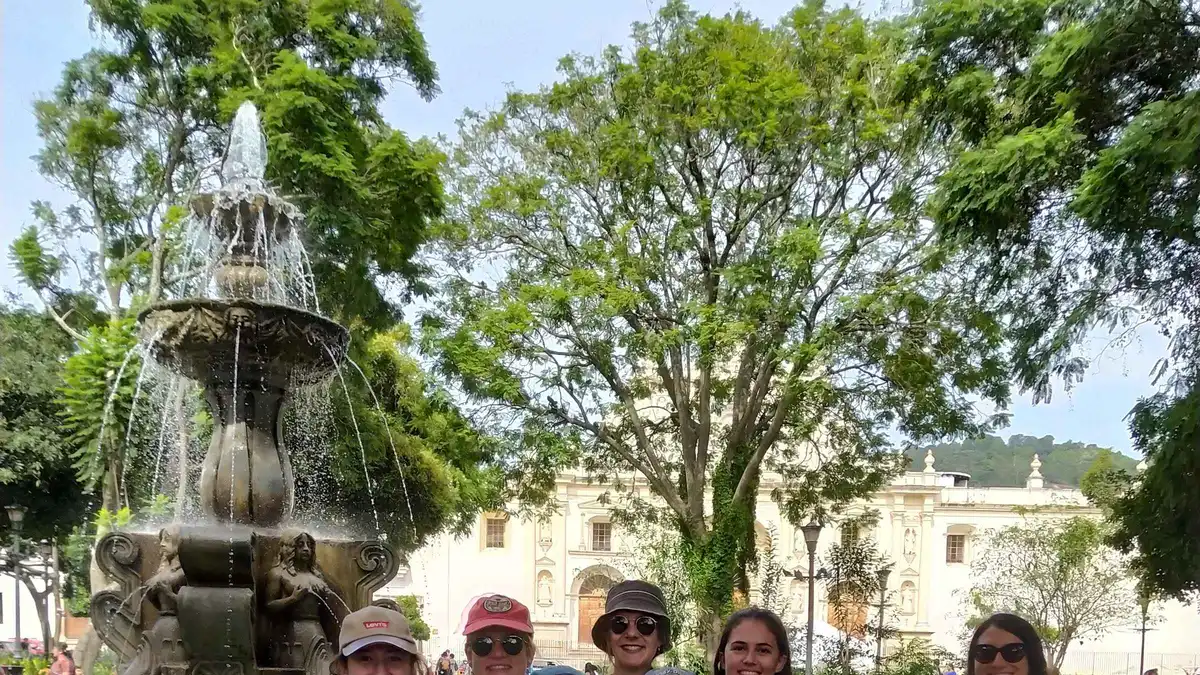 from $25
Antigua Guatemala: City Highlights Guided Walking Tour
2.5-hour small-group walk through the grid with a licensed guide; the fastest way to make the ruins and churches mean something.
Check Availability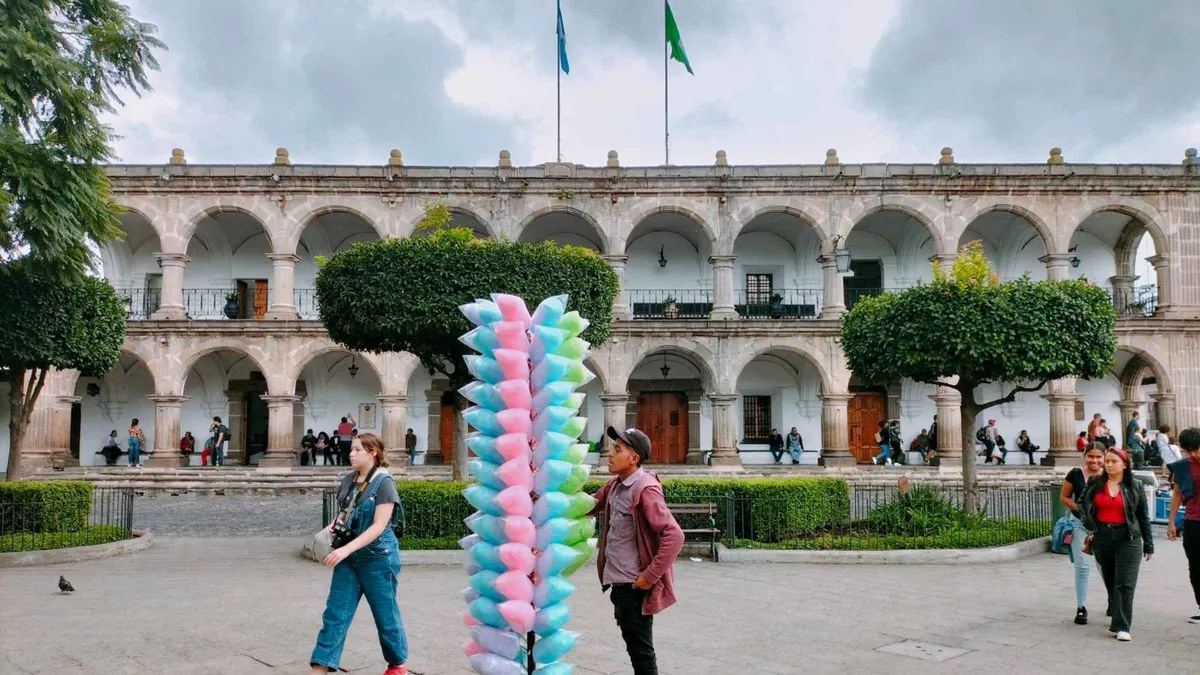 from $25
Antigua walking tour: Highlights, history, culture.
A cheaper 2.5-hour walking tour over the same ground as the top-rated one; fine if you just want orientation.
Check AvailabilityPrices, ratings and details are the platform's own. dollar figures are the listed prices — the platform bills in your account's currency.
What the Santa Clara ruins are
A convent built twice, opened once, and finished by earthquakes, at the quiet south end of the Antigua grid.
The founding
The Clarisas, the female branch of the Franciscan order, prepared their fourth convent of nuns in Santiago toward the end of the 17th century. The foundation is dated 1700, and the first stone of the buildings went in three years later. Construction ran from 1703 to 1715, and the first church was dedicated in 1715.
For a short while the convent worked as designed, a cloistered community behind the heavy walls that colonial Antigua built everywhere.
The earthquake and the rebuild
The 1717 San Miguel earthquake destroyed the first monastery, barely two years after the church opened. What followed is the reason the ruin looks the way it does. The rebuild, from 1718 to 1734, was directed by the architect Diego de Porres, the man behind much of colonial Antigua's finest work, and he gave the complex its baroque character.
Money ran short along the way. Around 1732 the nuns petitioned King Felipe V for help, and the new church finally opened on 11 August 1734, nineteen years after the first one.
The end and what stands today
In 1773 the Santa Marta earthquakes destroyed the complex almost completely, after only 39 years of use. The capital moved away and the convent was never rebuilt. Today the site is a tourist destination and a popular centre for social, cultural and educational activities, with no worship.
What you walk into is a roofless baroque nave, arches open to the sky, courtyard walls wearing ivy, and some of the most photographed stonework in the city. Wedding photographers know it well.
Are the ruins worth visiting?
A straight verdict, because the honest answer changes depending on what you want from a ruin.
Yes, for atmosphere and photography
The vaulted nave is the point. Standing under a baroque church roof that no longer exists, with light pouring through window openings that were built to hold glass, is an experience no intact church in Antigua gives you. The visit is short, the ruin is compact, and the arches frame themselves.
If you care about photographs, this is among the best raw material in the city, and morning light through the roofless windows is the reason to come early.
The comparison that decides it
When both convents charge, the money question comes down to Santa Clara versus Capuchinas. Capuchinas is the restored convent, explained, with the famous circular courtyard where the nuns' cells ring a central chamber. Santa Clara is atmosphere and scale, a bigger emotional hit and less interpretation.
Our advice is not to choose. They are eight minutes apart, they tell one story from two ends, and a single morning covers both.
Who should skip it
Skip Santa Clara if you expect a museum. No information panels, exhibits or visitor centre are documented for the site in any source we checked, and anyone who needs context on a plaque will leave frustrated. If that is you, book a guided city walk instead and let the guide carry the history, because the stones will not explain themselves.
How much time to give the Santa Clara ruins
No official source states a visit duration, so this routing comes from how the site actually walks. The ruin is compact and the nave dominates, which keeps most visits short and sweet.
| Routing | Time inside | What it covers | Skips / adds |
|---|---|---|---|
| Photo stop | about 15 minutes | The nave arches from the doorway | Adds nothing inside, best light is morning |
| Standard visit | 30-45 minutes | Nave, courtyard, the full ruin walk | The default routing |
| Ruins morning | about half a day | Santa Clara plus Capuchinas plus San Francisco on foot | The pairing most visitors actually enjoy |
The routing rule
Give the nave your first ten minutes and let the courtyard be the walk out. Photographers should arrive at opening, because the low sun comes straight through the roofless windows and the arches throw long shadows across the floor. By late afternoon on weekends the nave fills with wedding parties, and the quiet that makes the place work is gone.
Mid-morning sits between the two, calm enough for a slow walk and bright enough for pictures.
The convent in dated lines
-
1700
The foundation
The Clarisas establish the fourth convent of nuns of Santiago, prepared toward the end of the 17th century and formally founded in 1700
-
1703
First stone
Construction of the original monastery and church begins
-
1715
First church dedicated
After twelve years of building, the first church is dedicated and the convent enters use
-
1717
The San Miguel earthquake
The first monastery is destroyed barely two years after opening
-
1734
The baroque rebuild opens
Work directed by Diego de Porres produces the new church, opened on 11 August after money trouble that pushed the nuns to ask King Felipe V for help
-
1773
The Santa Marta earthquakes
The complex is destroyed almost completely after only 39 years of use, and the convent is never rebuilt
-
today
Ruin and venue
The ruins work as a tourist destination and a venue for weddings, concerts and private events, with social, cultural and educational uses and no worship
Sources: Spanish Wikipedia article Iglesia y convento de Santa Clara, identity and history only, plus facts-pack-1 research on INGUAT's listing of the site
Do
- Go in the morning, when the light comes through the roofless windows and the courtyards are quiet before the wedding photography sessions
- Carry small cash notes in quetzales, because access is marked paid with no published tariff and change at a ruin gate is never guaranteed
- Combine the visit with Capuchinas eight minutes north in the same morning, one story told from two ends
- Wear shoes that grip, because the worn stone floors of the nave are slick when it rains
- Agree a tuk-tuk fare of $1.31 (Q10) before boarding if you ride, the municipal tariff, since drivers often ask visitors more
Don't
- Don't expect posted hours or a fee board, none exists online or on site as far as any official source goes
- Don't plan a long visit, the realistic routing is 30-45 minutes and the ruin rewards a short, slow walk more than a forced march
- Don't climb on walls or step into planted areas, the masonry has survived two centuries of earthquakes and deserves better
- Don't come for a museum, no exhibits or information panels are documented, so bring your own context or book a guide
- Don't rely on card payment at the gate, carry quetzales because small heritage sites in Antigua work in cash
Getting there
The ruins sit at the quiet south end of the Antigua grid, which is exactly why they stay peaceful and exactly why first-timers sometimes miss them.
On foot
The address is 2a Avenida Sur between 6a and 7a calles. From the cathedral at Parque Central it is about six minutes' walk south along 2a Avenida Sur, on flat cobbles the whole way. The grid makes it hard to get wrong, and the walk passes working neighbourhood streets that most visitors never see.
On your way you pass /san-francisco-church/, three minutes from the ruins, which is why we always route the two together.
By tuk-tuk
If your legs or the heat object, flag a tuk-tuk. The municipal tariff is $1.31 (Q10) per in-town ride, but tuk-tuks are not metered, drivers often ask visitors more, and the practical street price drifts higher. Agree the fare before you get in and have the cash ready.
Tuk-tuks work in cash only and stop running at night.
Fitting it into a trip
For where the ruins sit in the wider city plan, from transport to money to the rest of the sightseeing map, see /plan/. It covers the logistics this page deliberately leaves out.
Five things most visitors do not know
The details that change how you look at the ruin once you are inside it.
- The convent lasted only 39 years as a working religious house before the 1773 earthquakes finished it, a shorter working life than most tourists spend planning the trip [Spanish Wikipedia]
- The architect of the rebuild was Diego de Porres, from the family that built half of colonial Antigua, including the cathedral block and the mermaid fountain at Parque Central [Spanish Wikipedia]
- The nuns asked King Felipe V of Spain for money around 1732 to finish the work, which is why the church took sixteen years to reopen after the earthquake [Spanish Wikipedia]
- INGUAT lists the ruins on its official Antigua page but with no fee, no hours and no practical data of any kind, a listing that is an acknowledgement and nothing more [facts-pack-1, visitguatemala.gt]
- The coordinate on this page comes from OpenStreetMap because no official source publishes one for the ruins, and no Wikidata item exists to fall back on [OpenStreetMap way 402712345]
Santa Clara ruins map
Santa Clara pin from OpenStreetMap way 402712345, other pins from the Wikidata items behind each page
What to pair with Santa Clara
The ruins work best as one stop in a south-to-north line through the grid. All four of these are close, and the first two belong to the same morning without argument.
San Francisco church
The working church and pilgrim shrine of Santo Hermano Pedro, three minutes northeast. After the silence of Santa Clara the contrast is the whole point, incense, pilgrims and a living congregation. See the /san-francisco-church/ guide.
3 min walkCapuchinas
The other paid convent ruin, eight minutes north, with the circular courtyard of nuns' cells and a restored complex you can read. Access is paid with no published tariff either, so the same cash rule applies. Full detail in the /capuchinas/ guide.
8 min walkCathedral
The ruined first cathedral at Parque Central, six minutes north, is the big sibling of Antigua's earthquake ruins, a vast facade with a working parish tucked inside. The /cathedral/ guide covers the split between parish and ruin.
6 min walkCerro de la Cruz
The viewpoint over the whole grid, about 25 minutes on foot and uphill, where the roofless nave you just stood in becomes one small rectangle among many. The /cerro-de-la-cruz/ guide has the trail details.
25 min walk uphillSanta Clara ruins questions
How much does it cost to enter the Santa Clara ruins?
No tariff exists online. Spanish Wikipedia marks access as paid, and fees reportedly change between Guatemalan nationals and foreign visitors, so the honest answer is a small gate fee paid in cash. Bring quetzales in small notes and expect to pay at the door.
What are the Santa Clara ruins opening hours?
Not stated. No official source publishes hours or closed days for the ruins, and no official page for the site exists. Go in daylight and treat morning as the best window, both for light and for quiet.
Where are the Santa Clara ruins in Antigua?
On 2a Avenida Sur between 6a and 7a calles, about six minutes' walk south of the cathedral on flat cobbles. A tuk-tuk costs the municipal tariff of $1.31 (Q10) per in-town ride if you would rather ride, and you should agree the fare before boarding.
Is Santa Clara better than Capuchinas?
They are different visits rather than a ranking. Santa Clara is atmosphere and photography in a big roofless nave, Capuchinas is the restored convent with the famous circular courtyard of cells. Do both in one morning, they are eight minutes apart. The Capuchinas guide covers its side in detail.
Do you need to book the Santa Clara ruins in advance?
No. No booking system exists for the ruins, you walk in and pay any gate fee in cash. The only bookable pairing is a guided city walk such as the highlights walk, which covers the city's churches and ruins with a licensed guide.
Why does nobody publish the Santa Clara fee?
Because the institutional chain is broken. The ruins have no official page of their own, INGUAT lists them on its Antigua page without any practical data, and CNPAG, the heritage council that protects Antigua, has no reachable website. The finding is printed here as the negative result it is, not as a guess.
Santa Clara on film
Three videos that show the nave and courts before you walk in.
Exploring Convento Santa Clara, Antigua, Guatemala
A walk through the nave and courts that shows the ruin's scale before you go.
Video: Exploring The WorldConvento de Santa Clara
The conservator's-eye tour of the ruins from the council that protects Antigua.
Video: Audiovisuales CNPAGSanta Clara Convent, Antigua Guatemala
A slow visit that covers the arches and the courtyard light.
Video: Mitchel's Retirement TravelsVideos load from YouTube only when you press play.
Where the ruins fit in a day
Santa Clara is a south-end stop, and the smart day routes through it rather than out of the way for it.
A routing that works
Start the morning at Santa Clara, when the nave is empty and the light is low, then walk three minutes to San Francisco church for the working-church contrast while it is still cool. Midday, head north to the municipal market for lunch and shade while the sun is at its hardest. The afternoon belongs to Capuchinas, eight minutes north of the ruins, followed by the cathedral at Parque Central as the light softens on its ruined facade.
That is a full day on foot, almost entirely flat, with the ruins doing the atmospheric work early. For more ways to order the city's sights, the things to do page holds the full set, and the two convents you have met here anchor its colonial-ruins shortlist.
Prices, hours and terms are set by the venue or operator and confirmed at checkout.
We may earn a commission if you book through one of our links, at no extra cost to you. Full affiliate disclosure