 Antigua Guatemala City Guide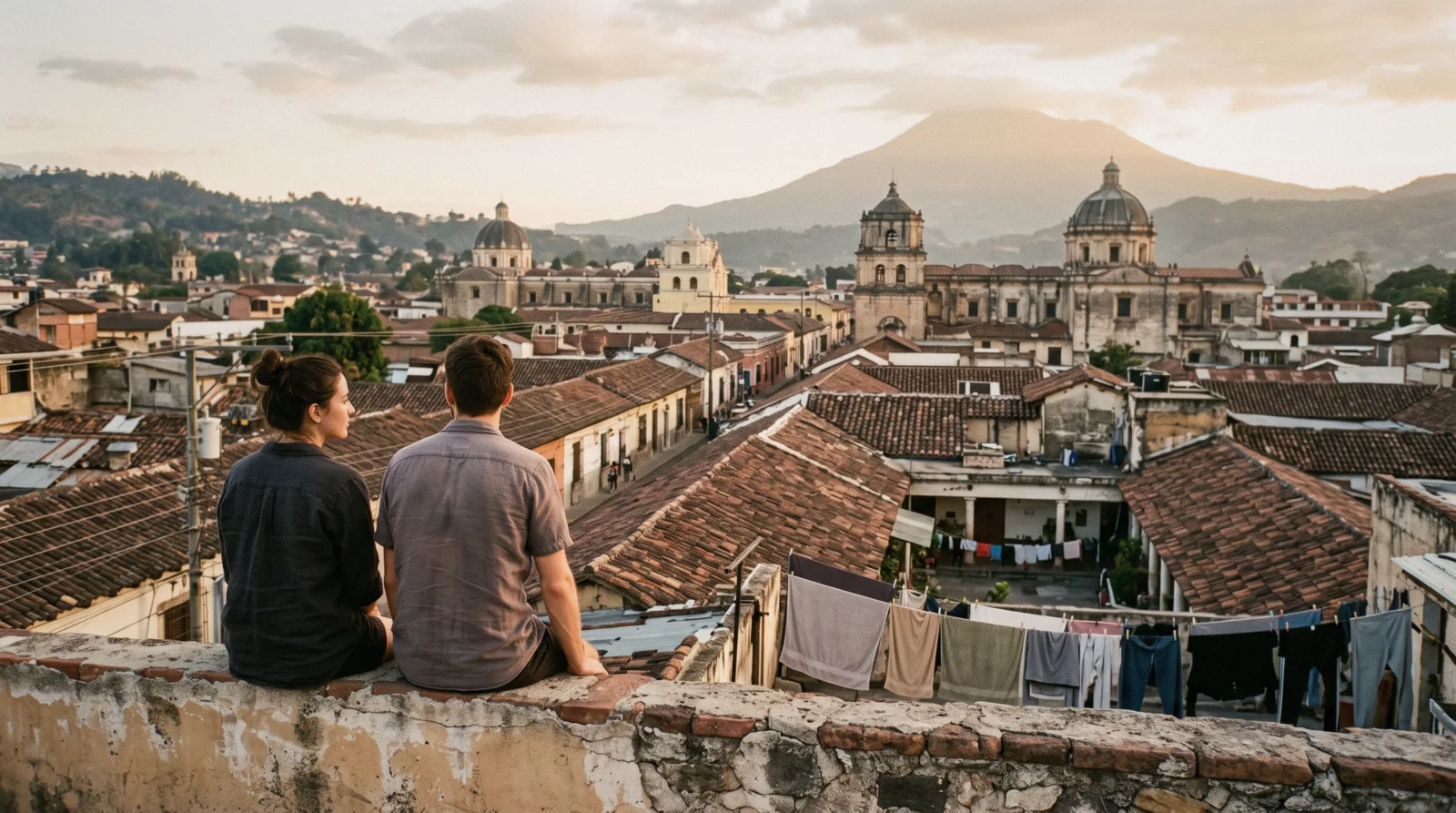
Antigua for Free
The free things to do in antigua guatemala are not the leftovers, they are most of the city, and this Antigua Guatemala city guide can prove it. The most photographed monument in town spans a public street. The best viewpoint is a signposted public trail. The showpiece church facades face the street for nothing. And once a year the whole centre becomes a free stage of carpets and processions. One honest caveat runs under the whole page, we print free only where the sources back it, and we mark the murky cases as murky.
Quick answer The free list, the viewpoint, and the honest catches
The city's headline sights cost nothing, the arch, Parque Central with its 1737 fountain, the Cerro de la Cruz trail 20 to 30 minutes up, and the facades of La Merced and the other churches on the streets themselves. Once a year Holy Week lays dyed-sawdust carpets across those same public streets and runs about 56 velaciones and 58 processions, all watchable from the kerb for nothing. The paid layer exists and earns its money, and the honest ledger says which tickets are worth it.
Key takeaways
- The free-day routing packs the whole free city into one morning, timed hour by hour.
- The free churches, ticketed ruins line matters, worship spaces publish no fees while the heritage-trust ruins charge at the desk.
- If the budget stretches to one guided hour, the $25 walking tour is the cheapest spend on the tours hub.
What Looks Paid but Is Free
The list exists because the city reads like a ticketed monument town, and its headline sights are mostly public ground, so the table splits what is genuinely free from what merely looks free from a distance.
| Place | What it might seem to cost | What is actually free | The catch |
|---|---|---|---|
| Santa Catalina Arch | The city's signature monument, so surely a ticket | It spans a public street, built from 1693, and you walk under it at any hour | Mid-morning crowds and a cobbled crossing underfoot |
| Parque Central | The main square of a UNESCO city | A public park with the Fuente de las Sirenas of 1737 at its middle | Vendors work the edges, and shade benches go early |
| Cerro de la Cruz | The famous viewpoint of the volcano over the roofs | A signposted public trail of 20 to 30 minutes from the centre, no ticket office exists | No fee is published because there is no gate, and no official shuttle either |
| Church facades, La Merced above all | Baroque showpieces of this quality | The facades and the worship spaces, which publish no entry fee | The convent museums are a different story and publish nothing either way |
| Holy Week carpets and processions | The biggest show in the country | Public streets, about 56 velaciones and 58 processions in the municipal plan, kerb-side and free | Pedestrian perimeters from 04:00 on procession days, and the biggest crowds of the year |
| Getting around during Holy Week | Transport in the grid at its busiest | The municipality runs free park-and-ride buses from the Santa Ines, INVAL and Nimajay lots | Procession days only, and the walks in are on foot |
Free here means no gate and no published fee, which is the only claim the sources support. Where a desk might ask for a few quetzales, the row above says so, and the costs page carries the small-change arithmetic.
The Open-Air City: Streets as Sights
The grid is the museum
The city grid itself is the free museum, and no ticket booth guards it. Calle del Arco is the city's most recognisable pedestrian corridor, with the arch framing Volcan de Agua at the end of the line of sight. In Parque Central the Mermaid Fountain of 1737 sits at the middle, beside benches under laurel trees where the morning trade gathers.
Between the pins
The walks between sights cost nothing and give plenty, ruined walls, bougainvillea spilling over plaster, church domes against the sky. The walks page is the self-guided layer over all of this, and the map shows how close the free pins sit to one another, usually a few blocks at most. The photographer's note is that the light arrives twice, once at opening and once at the blue hour, and both showings are free, which is more than can be said for most of the world's famous streets.
The Squares: The Free Show That Never Closes
The park is the city's free theatre, and its set dressing is four centuries deep.
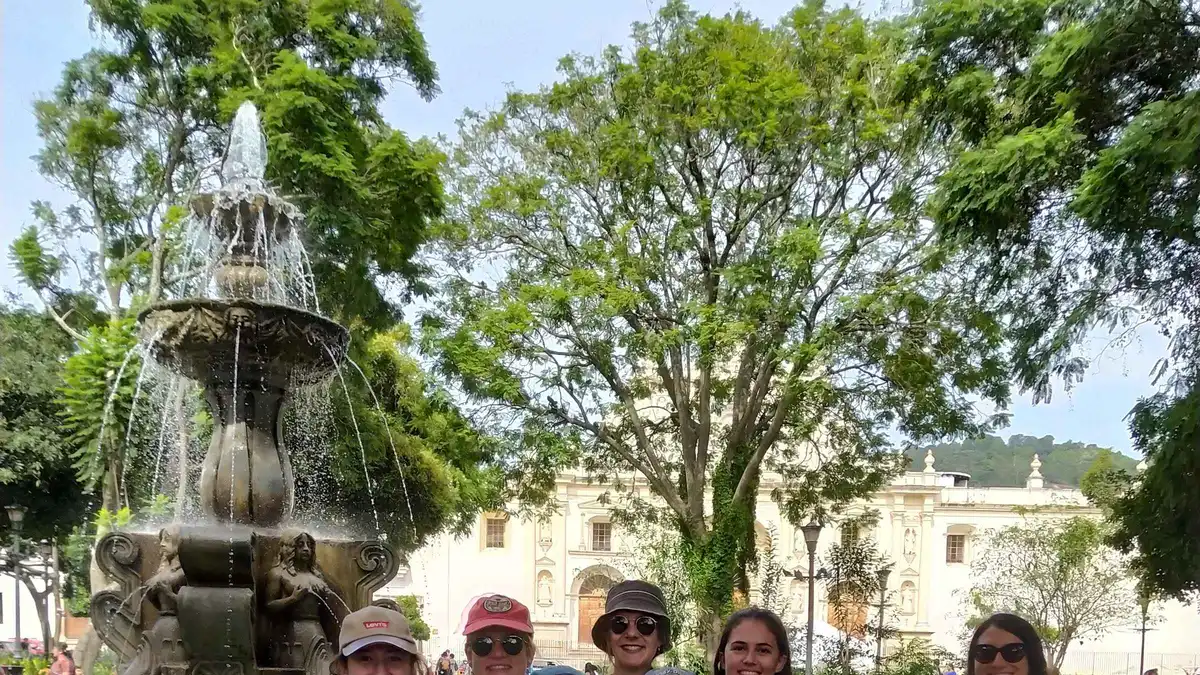
Parque Central has answered to three names, Plaza Mayor, Plaza Real and Plaza de Armas, and its fountain, the Fuente de las Sirenas, was built by Diego de Porres in 1737. Around it, the palaces do their facades for free, the royal houses across the south side begun in 1558 with the treasury, jail and army quarters behind them, and the City Hall rebuilt after the 1751 earthquake on the other flank. INGUAT's own tourist office sits two blocks east when a question needs an official answer.
The show is the life, shoe-shiners working the benches, vendors spreading textiles at the edges, children chasing pigeons past the laurel trees, and none of it costs a quetzal to watch. The benches in the sun go first, the shade follows, and by evening the park turns into the city's living room, which is why the free-day routing below starts and ends here.
The Arch, the Crossing and the Free Photo
The single most photographed structure in the city charges nothing, and its story is better than its postcard.
The arch grew from a July 1693 building project by the Convento de Santa Catalina, so cloistered nuns could cross the street between the convent and the school without being seen, and technically it is a bridge, 23 m of baroque stone spanning 5a Avenida Norte. The municipality owns the arch, the old convent beside it is now a private hotel, and the whole structure was restored in 2017. The clock in its tower is a later intruder with a dramatic life, a French mechanism that must be wound every three days, stopped by the 1976 earthquake and restarted in 1991, though which decade installed it is a fight between two encyclopedias that this page declines to referee.
The practical free advice is about the crossing, not the monument. The street under the arch is the city's most recognisable pedestrian corridor, the frame with Volcan de Agua in the arch opening works best in the early morning before the crowd and the traffic of delivery vans, and the cobble crossing underfoot punishes bad shoes. Everything else on the street, the craft shop windows and the brewery taproom sign, is free to look at and priced at will.
The Viewpoint: Cerro de la Cruz
What INGUAT says
INGUAT's own description calls it a viewpoint with the most iconic views of the city, reached by a signposted trail that takes 20 to 30 minutes from the historic centre. No fee and no ticket office exist at the top, which is why no published price exists to print.
Practical lines
A reported hillside shuttle has no official trace in any source, so the walk is the way. Go in the morning before cloud takes the volcano, the white cross is the photo, and the descent returns you to the grid in time for lunch. Full detail lives at /cerro-de-la-cruz/.
Free Churches, Ticketed Ruins
The line that decides the money
Worship spaces publish no entry fees, and no parish in the city runs a website that could charge one. So the doors of La Merced, the cathedral parish and San Francisco's shrine open onto the street for nothing, with candle boxes beside the pews for whoever wants to drop a coin.
The ruins are a different economy
Capuchinas is owned by the heritage trust CNPAG, access is paid, and no official tariff is published anywhere. Carry small notes and expect a desk. The same caution applies to the cathedral ruins.
The honest gaps
La Merced's convent museum has no official online presence, and the cathedral ruins charge a desk fee of unpublished amount. The phrase to trust is no published fee, not free forever.
The Free Floors of the Paid Venues
Where the split sits
Some venues split free from paid on their own doorsteps. Chocomuseo at 4a Calle Oriente No. 8 opens every day 10am to 7pm and prices only its workshops, from $20 (Q152.8) for the mini and $30 (Q229.2) for bean-to-bar, the museum floor itself carries no official price. The craft market at Nim Po't on 5a Avenida Norte No. 29, right by the arch, mentions no admission fee at all.
Window shopping counts
The Jade Maya showrooms open daily 9am to 6pm with entry not stated, which means window shopping costs nothing unless a workshop tempts you. More venues and their hours sit on the shopping page.
One Free Morning, Door to Door Through the Churches
The church layer is the city's deepest free run, and the stories are printed on the stones.
Start at La Merced, the cream-and-yellow baroque facade built between 1749 and 1767, undamaged by the 1773 earthquakes because it was practically new, its Fountain of los Pescados in the grounds one of Latin America's largest colonial fountains at 27 m across. Walk four blocks south to San Francisco, the church Diego de Porres inaugurated in 1702 over 16th-century fabric, where Santo Hermano Pedro, canonised in 2002, draws pilgrims to his tomb. End at the cathedral parish on the park, first built in 1545, consecrated in 1680, a metropolitan by 1743, ruined in 1773.
Two film facts come free with the walk, for anyone who likes the city with credits: the San Francisco ruins played the Green Goddess temple in The New Adventures of Tarzan in 1935, and an 1875 photograph of those same ruins was taken by Eadweard Muybridge. The worship spaces ask nothing, the candle boxes wait beside the pews, and the desk fees at the ruins behind them are the only money in the whole morning.
Holy Week from the Kerb
The richest free show
Holy Week is the richest free event of the year. Families lay alfombras of dyed sawdust across the procession streets during the week, the municipal plan counted about 56 velaciones and 58 processions in one season, and the streets themselves are the auditorium, so the front row is free and unwicketed.
The catches, printed
The logistics are free if you plan around them, the municipality runs free park-and-ride buses from the Santa Ines, INVAL and Nimajay lots into the grid on procession days, with a pedestrian perimeter active from 04:00. The honest downsides are the biggest crowds of the year, shops restocking only before 04:00 on the holiest days, and bar closures on Holy Thursday and Good Friday reported in press. Routing and closures live on the Semana Santa page.
The Free Buses: One Week When Transport Is Free Too
For one week a year the municipality runs the transport as free as the show.
On procession days during Holy Week, when a pedestrian perimeter closes the central streets from 04:00, the municipality runs free park-and-ride buses into the grid from three lots, Santa Ines at the end of Calzada Santa Lucia to Fuente de las Delicias, INVAL to San Francisco El Grande, and Rancho Nimajay to 4a Avenida Sur. The lots themselves sit outside the perimeter, the buses skip the traffic the perimeter creates, and the sticker private cars buy under the MarbEx scheme, Q10 to Q20, is the option this page is glad to replace with a free seat. The full closure map and the procession calendar are the Semana Santa page's territory.
A Free Day, Morning to Vespers
The hour-by-hour shape
One morning takes in the viewpoint, the park, the arch and the best facade, with the afternoon left over for cacao and blue hour. The order follows the light.
| When | Where | Cost | Why this order |
|---|---|---|---|
| 08:00 | Cerro de la Cruz | Free | Cool air for the 20 to 30 minute climb, clear volcano before the cloud |
| 09:30 | Parque Central and the fountain | Free | Coffee smells and the morning trade, benches in the sun |
| 10:00 | Santa Catalina Arch and Calle del Arco | Free | The frame photo while the street is still walkable |
| 10:45 | La Merced facade and the church doors | Free | The baroque showpiece at its best light |
| 11:30 | Nim Po't and the craft market by the arch | Free to browse | Textiles without obligation, prices marked or asked |
| 15:00 | Chocomuseo floor, 4a Calle Oriente | Free entry, workshops from $20 (Q152.8) | Rain-proof, and the cacao history is the story |
| 17:30 | Back to the park as the lamps come on | Free | The grid at blue hour, laundry lines and domes |
Why this order
The walking order is shaped by light and crowd, not by tickets, and the map shows how short every gap is.
Seven Free Mornings for a Week
A week of free mornings, because one day of the free city is a taster and the grid rewards repetition.
No morning repeats a sight, every plan ends by early afternoon before the rain thinks about arriving, and nothing on the list carries a gate. The walks between are the content, and the walks page carries the self-guided routes if the mornings want a theme.
| Day | The free morning | The honest limit |
|---|---|---|
| Day 1 | Cerro de la Cruz at opening, then the arch on the way down | The climb is 20 to 30 minutes and the volcano hides by midday |
| Day 2 | Parque Central, the palaces, the cathedral parish | The ruins behind the parish charge at a desk |
| Day 3 | The market corner, produce halls and the crafts hall a block south | Nothing to buy is compulsory, but cash makes it easier |
| Day 4 | Church morning, La Merced to San Francisco | Candle boxes and shrine crowds on feast days |
| Day 5 | Craft windows, Nim Po't and the Jade Maya showroom floor | Showroom entry not stated, browsing costs nothing |
| Day 6 | Chocomuseo floor and the east-end streets | Workshops from $20 (Q152.8) are the paid temptation |
| Day 7 | The whole free-day routing again, in reverse order | Repetition is the point, the light is different every day |
What Is Not Free, Said Plainly
A free page earns trust by listing the gates too, so nobody walks across town for a ticket they did not expect.
The ridge park is not free, Hobbitenango sells an $8 day pass and an $8 shuttle, and the eco park is the reason the $35 tour card exists. The heritage ruins charge, Capuchinas at a desk under CNPAG ownership with no published tariff, and the cathedral ruins keep a similar desk. The farm museums run Q40 ($5.24) with a separate general entry, the chocolate workshops start at $20, and the museum compounds of Casa Santo Domingo quote nothing online at all, which is not the same as free.
What survives for zero quetzales is exactly the list above, and it is most of the city.
| Place | Published figure | The free substitute |
|---|---|---|
| Hobbitenango | $8 plus $8 shuttle | Cerro de la Cruz, free, 20 to 30 minutes up |
| Capuchinas | Paid, tariff not stated | The facades and streets of the church run above |
| Casa Santo Domingo | Not stated online | The free nave walk outside and the arch at the end of the same street |
| Chocomuseo workshops | From $20 (Q152.8) | The free floor, with the shop as the classroom |
Free Versus Worth Paying For: Compare Before You Spend
The argument
The free city covers the sights, and the paid layer buys what streets cannot, a guide's hours, a ridge shuttle, a kitchen. So the ledger prices the four cheapest paid adds, every one cancelling free up to 24 hours before, figures read in Q3 2026.
| The paid add | Price | What it buys that the streets cannot |
|---|---|---|
| City highlights walking tour | $25 | A guide's interpretation of the stones you have been walking past |
| Night legends walk | $25 | The city's dark stories, told in the streets they happened in |
| Hobbitenango and Cerro de la Cruz tour | $35 | The ridge shuttle choreography done for you, park entry included |
| Casa San Miguel cooking class | $38 | A Guatemalan kitchen from market basket to plate |
Where the money earns itself
None of the four is needed to see the city, and that is the point of this page. What they add is interpretation and logistics, a person who knows which stone is which, a driver who knows the ridge road, a cook who knows the market basket. If the budget allows exactly one, the walking tour costs the least and covers the most ground you already walked free.
The Free Layer Beyond the Grid
Free does not stop at the city limits, it just gets less documented.
The village buses that load behind the market reach the weaving villages for fares the operators post informally rather than publish, and the walk through Jocotenango to the cultural farm at Finca La Azotea costs nothing even though the farm's museums charge Q40 ($5.24) and its general entry is a separate fee, so the grounds-and-windows version is the free one. Honest limits printed plainly: San Antonio Aguas Calientes details were not verifiable from official sources when this page was built, and the village fares are the ones the drivers ask for, not figures any authority publishes. The Earth Lodge restaurant above El Hato opens to day visitors from 8am to 8pm with no cover charge, though the kitchen was closed for renovation all of September with a planned reopening, so check before the walk.
Rain on a Free Day
The wet season storms arrive on an afternoon schedule, and the free day has an indoor answer.
From May to October the pattern is a bright morning and an afternoon storm, hardest in September at 311 mm over about 28 rainy days, so the free morning belongs outdoors and the free afternoon moves under a roof. The Chocomuseo floor at 4a Calle Oriente opens daily 10am to 7pm and its entry carries no official price, the craft-market windows keep their goods dry, and the church doorways hold a dozen visitors out of the rain at a time with centuries of practice. No official list of rain closures exists, so this page prints none, and the rainy-day page carries the fuller indoor plan.
The weather page holds the 30-year table behind the pattern.
The Cheap Paid Layer, When the Budget Stretches
Four cards under $40 cover the guided version of the free city, its stories, its ridge and its kitchen. Every one cancels free up to 24 hours before.
 from $25
Antigua Guatemala: City Highlights Guided Walking Tour
2.5-hour small-group walk through the grid with a licensed guide; the fastest way to make the ruins and churches mean something.
Check Availability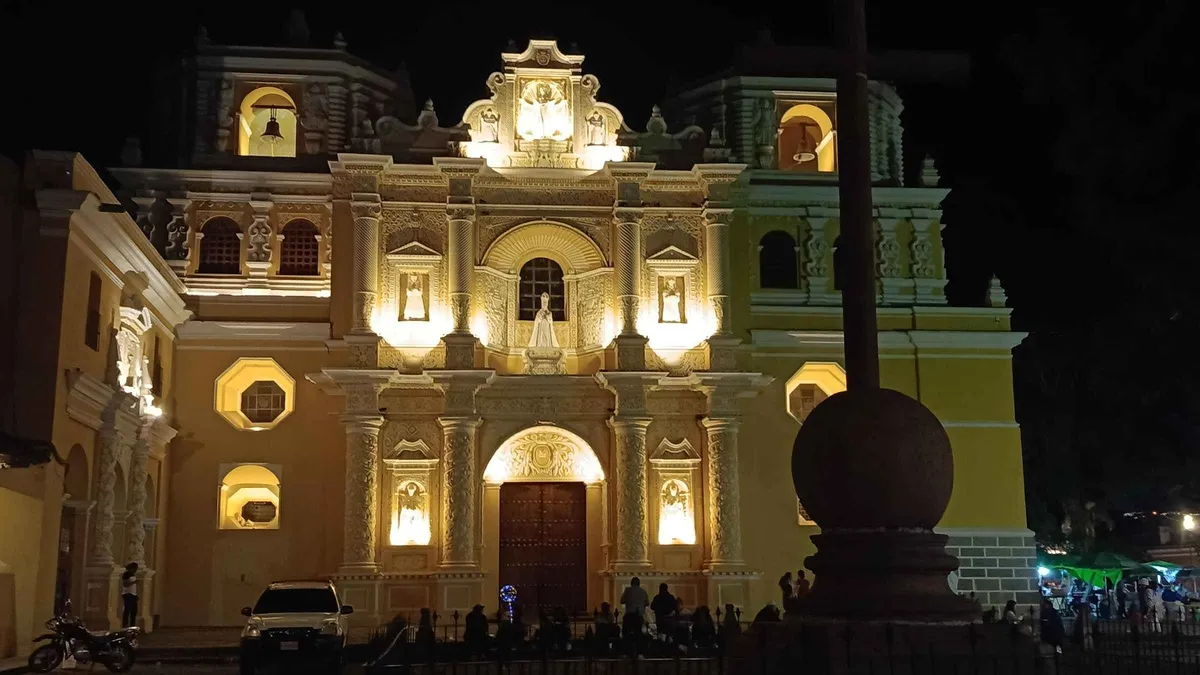 from $25
La Antigua Myths and Legends Stories Night Walking Tour
Two hours of the city's legends after dark; the nightlife option that does not involve a bar.
Check Availability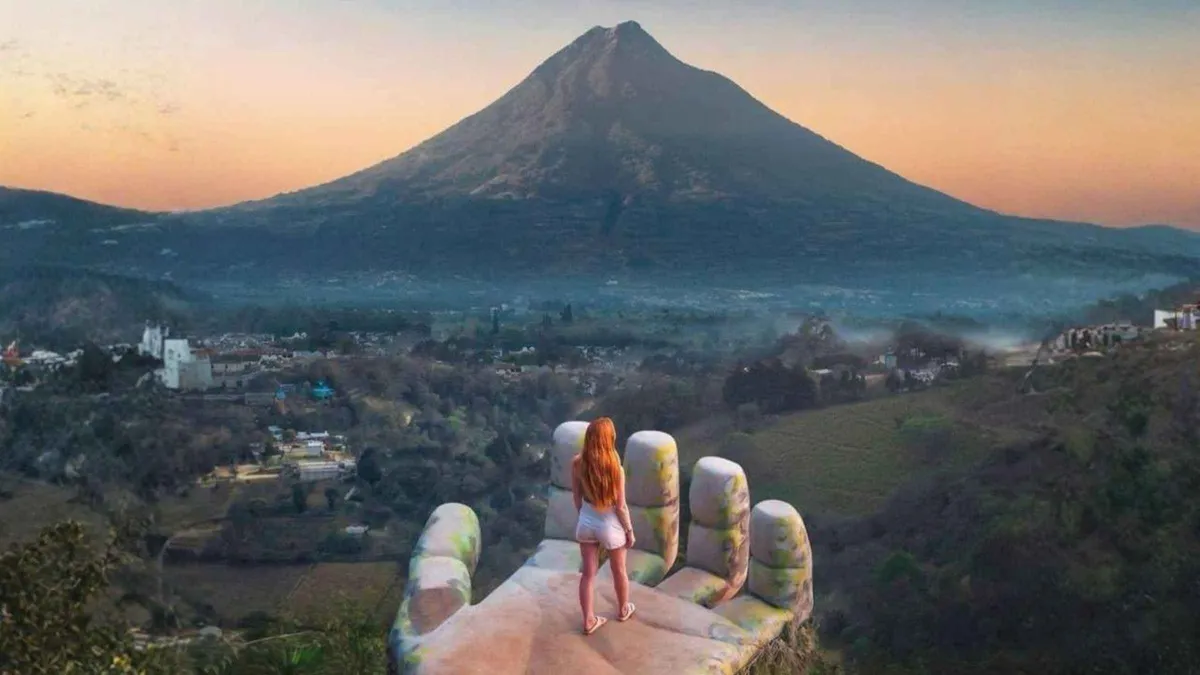 from $35
Antigua: Hobbitenango Eco-Park & Cerro de la Cruz Tour
Shuttle out to Hobbitenango plus a Cerro de la Cruz stop - the ridge and the viewpoint in one half-day.
Check Availability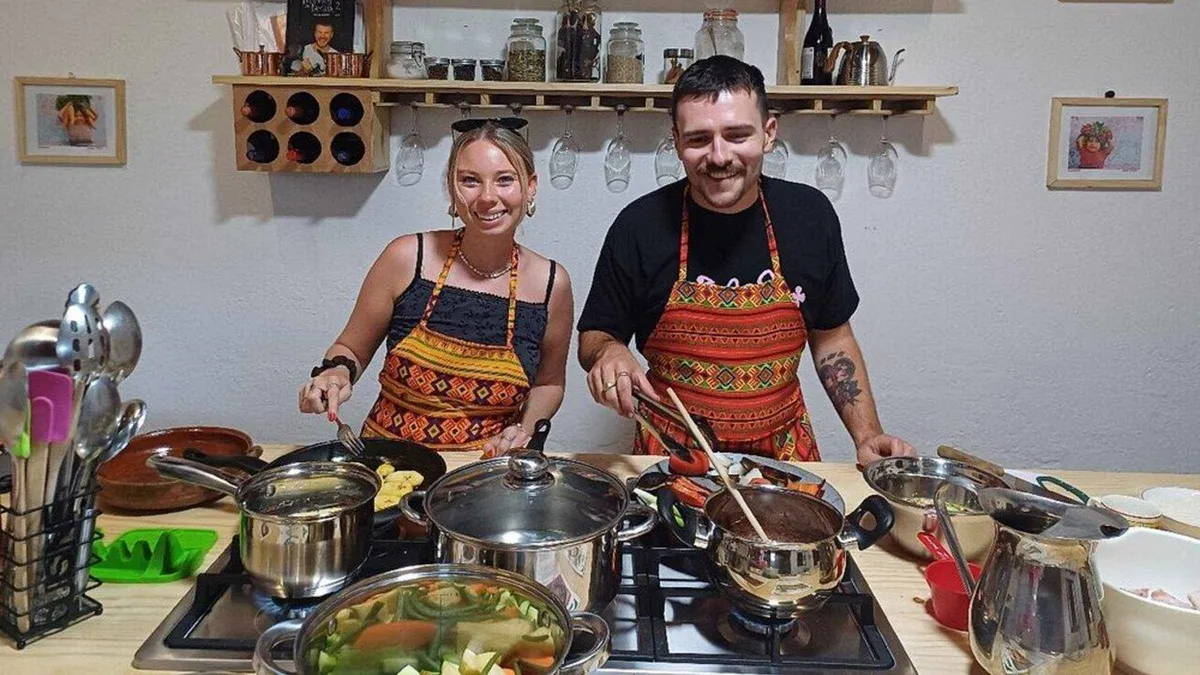 from $38
Antigua: Traditional Guatemalan Cooking Classes — Casa San Miguel.
Two hours of hands-on Guatemalan home cooking in a family kitchen; the private, personal version.
Check AvailabilityPrices, ratings and details are the platform's own. dollar figures are the listed prices — the platform bills in your account's currency.
Where the Free Day Goes Next
The free day plugs straight into the rest of the guide, ranked sights, routes and money.
Antigua for Free: Questions
What is free to do in Antigua Guatemala?
The arch spanning its public street, Parque Central with its 1737 fountain, the signposted Cerro de la Cruz trail, the facades and worship spaces of the churches, and the Holy Week carpets and processions watched from the kerb. Each claim is sourced in the table at what looks paid but is free, including the catches.
Is Cerro de la Cruz free?
There is no gate and no published fee, and no ticket office exists at the top. INGUAT describes a signposted trail of 20 to 30 minutes from the historic centre. No official shuttle service is traceable in any source, so plan on the walk. The full picture is at Cerro de la Cruz.
Are the churches in Antigua Guatemala free to enter?
The worship spaces publish no entry fees, so La Merced, the cathedral parish and San Francisco's shrine open onto the street for nothing. The ruins are another matter, the heritage-trust sites such as Capuchinas are paid at tariffs that are not published online. The line is drawn at free churches, ticketed ruins.
Is the Chocomuseo free?
The museum and shop floor carries no official price on the venue's own site, so browsing costs nothing as far as any source states. The paid part is the workshops, from $20 (Q152.8) for the mini session. Hours and prices are detailed at the free floors of the paid venues.
What is there to do at night that costs nothing?
Walk. The grid at blue hour is the show, the arch lit up, the park's evening trade, domes and laundry lines against the sky. The free-day routing ends at the park as the lamps come on, and the walk home is the entertainment. The order is set out in a free day, morning to vespers.
How much cash do I need for a free day in Antigua?
Admission is zero, so the cash goes on water and small conveniences. If the legs give out the tuk-tuk tariff is Q10 ($1.31) municipal, and the ATMs charge Q40 ($5.24) to Q49 ($6.41) per withdrawal, so carry notes from home or change larger ones in town. The sums sit on the costs page.
Is Parque Central free to enter?
Yes, it is a public square, the city's living room, with the 1737 Mermaid Fountain at its middle and the old palaces around it, and it has carried three names in its life. The benches are free too, and the park page holds the detail.
What is the best free viewpoint in Antigua Guatemala?
Cerro de la Cruz, and it is not close. The signposted trail takes 20 to 30 minutes from the centre, the whole grid sits below with the volcano behind, and no gate or ticket office exists at the top. The viewpoint guide covers the timing.
Is Antigua worth visiting on a small budget?
The free layer is most of the city's fame, the arch, the viewpoint, the facades, the carpets, and the cheap paid adds start at $25 for two guided hours. What a small budget cannot buy here is a volcano morning, and the honest verdict page weighs that in full.
The Free City, on Film
Three walks through the grid that cost their makers nothing but shoe leather, which is rather the point of this page.
Antigua Guatemala walking tour on historical center 4K
The historic core at street level, every block of it free to walk.
Video: Wandering PeteAntigua Guatemala is UNDERRATED | 3 Day Travel Guide
A three-day shape of the city with the free layer carrying most mornings.
Video: Explorin with LaurinTop Things to do in Antigua Guatemala (Don't Miss These!)
The priority list, most of which sits on public streets.
Video: Kiran Goes PlacesVideos load from YouTube only when you press play.
We may earn a commission if you book through one of our links, at no extra cost to you. Full affiliate disclosure