 Antigua Guatemala City Guide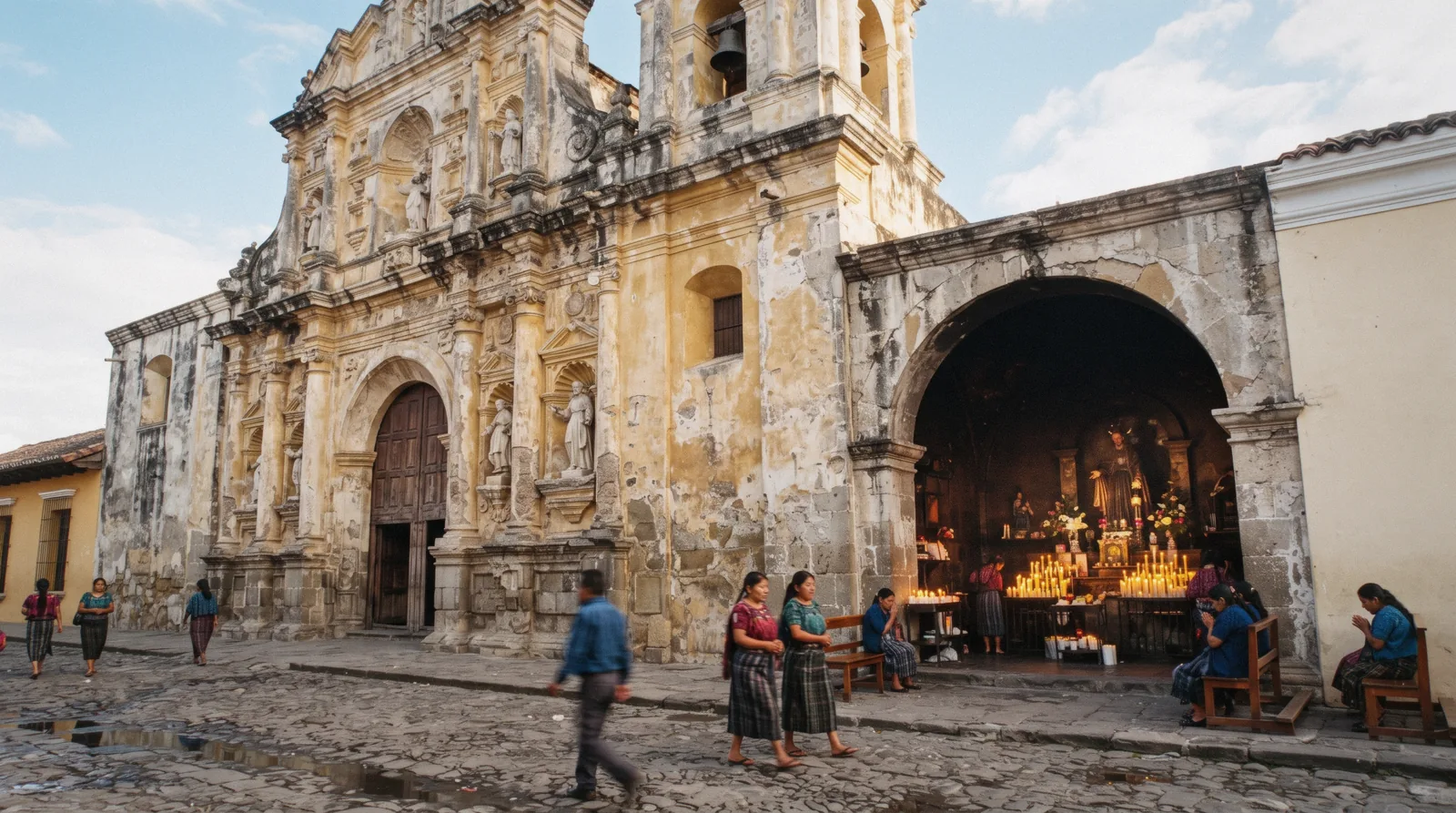
San Francisco Church
San Francisco is the great pilgrimage church of Antigua, and the san francisco church antigua story is really two stories in one place. The first is architectural: a Spanish seismic baroque church built by Diego de Porres and inaugurated in 1702, battered by every major earthquake the city has suffered and partly rebuilt around ruins that stood open to the sky for nearly two centuries. The second is devotional. Inside waits the tomb of Santo Hermano Pedro, the humble Franciscan beatified in 1980 and canonized in 2002, whose grave draws thousands of pilgrims to this southern corner of the city every year. Both stories are free of the usual ticket-office friction because no entry price and no visiting hours are published anywhere, a finding we confirm rather than paper over. Start with our Antigua Guatemala city guide for the wider picture, or let the city highlights walking tour carry you here as part of a guided loop that names this church as a stop.
Quick answer What it is, cost, hours, the shrine
San Francisco is Antigua's great pilgrimage church, the current building inaugurated in 1702 by Diego de Porres in Spanish seismic baroque with spiral Salomonic columns, partly wrecked and partly rebuilt after the earthquakes of 1717 through 1976. Inside waits the tomb of Santo Hermano Pedro, beatified in 1980 and canonized in 2002, which draws thousands of pilgrims a year. No entry price or visiting hours are published anywhere. Takeaways: 1. Verdict: come for the shrine first and the ruins second, and hear the story on the city highlights walk whose route names this church. 2. The honest cost picture is in the cost table: no fee is published, so we print the finding instead of a number. 3. Pair it with the Santa Clara ruins, three minutes southwest on foot.
Key facts
Opening hours
| Published hours | None. No official source publishes visiting hours |
|---|
Closed Not stated. A working church, so worship times govern, no published visitor hours exist
Admission
- Adult
- Not stated. No entry price for the church, the shrine or the Capilla del Santo Hermano Pedro is published anywhere. The church has no website, only a Facebook page whose content is not retrievable
Planning it
- Time needed
- Not stated by any official source. Our routing: 30 to 45 minutes for the church, the tomb and the ruins section
- Book ahead
- Optional — walk-up usually fine
- Address
- On the southern edge of the historic grid, about five blocks south of Parque Central, Antigua Guatemala (GPS from Wikidata Q3670022)
What a visit costs
These are two different kinds of visit with two different price logics. The shrine access itself has no published fee anywhere, which is unusual for a site of this stature and worth understanding before you arrive. The guided walks that include the church on their route are bookable products with fixed prices, free cancellation and a set duration, so they sit in the table as the only concrete numbers that exist.
Are you coming to pray at the tomb, or to read the ruins as history?
| Option | Price | Includes | Fine print | Cancel | Book |
|---|---|---|---|---|---|
| Entry at the churchPilgrims and visitors coming for the church and the tomb of Santo Hermano Pedro | The 1702 church, the tomb of Santo Hermano Pedro, the Capilla del Santo Hermano Pedro and the ruins section | No fee or visiting hours are published anywhere. The church has no website, only a Facebook page. Carry small notes in case a donation is asked | Not stated as refundable | Official site | |
| City highlights walking tourVisitors who want the church's history told, its listing names this church as a stop | $25 | Licensed guide on a 2.5-hour loop that includes the Church of San Francisco | Meeting point at the Parque Central fountain | Free cancellation up to 24 hours before | Check Availability |
| Highlights, history and culture walkBudget travellers wanting orientation | $25 | Small-group orientation walk over the same ground | Meeting point shown at checkout | Free cancellation up to 24 hours before | Check Availability |
No fee figure exists in any official source, checked through facts-pack-1. Tour prices are the operators' own listings. Read in Q3 2026.
Guided walks that include this church
No operator sells a San Francisco only entry, so nobody can sell you a ticket to this church alone. What does exist is a small set of city walks, and one of them, the city highlights tour, explicitly names the Church of San Francisco as a stop on its published route. That makes it the honest pairing here: you pay for a guided loop of Antigua and this church is one of the stops on it, rather than a standalone admission that does not exist.
 from $25
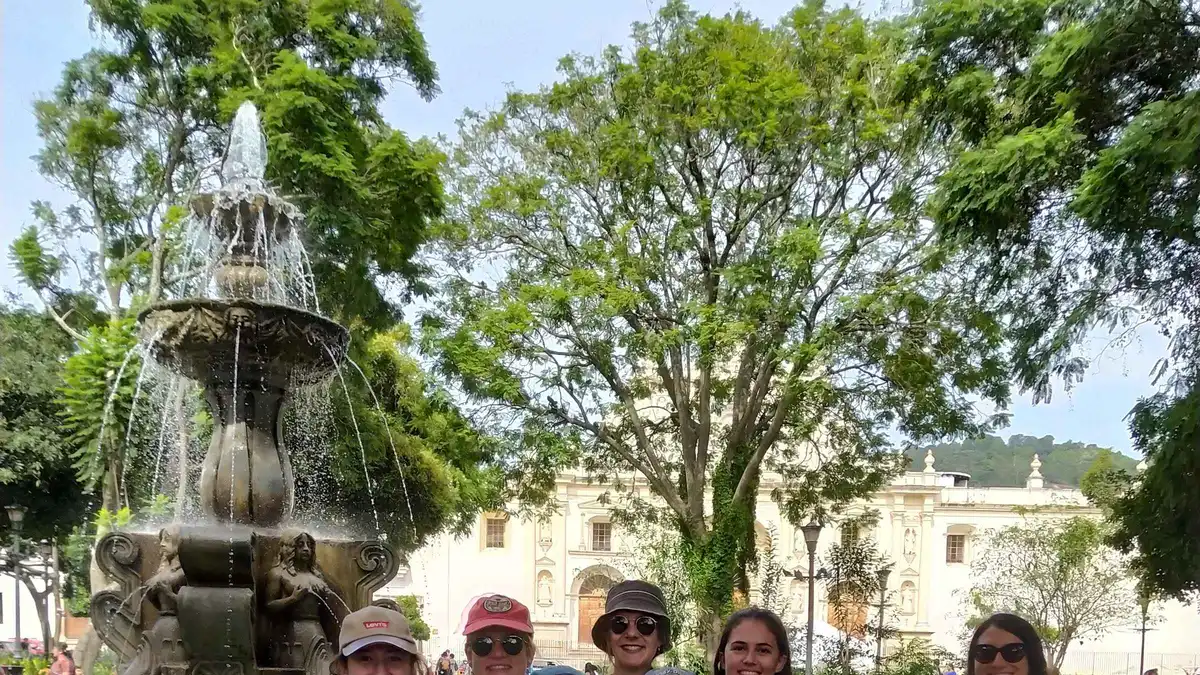
Antigua Guatemala: City Highlights Guided Walking Tour
2.5-hour small-group walk through the grid with a licensed guide; the fastest way to make the ruins and churches mean something.
Check Availability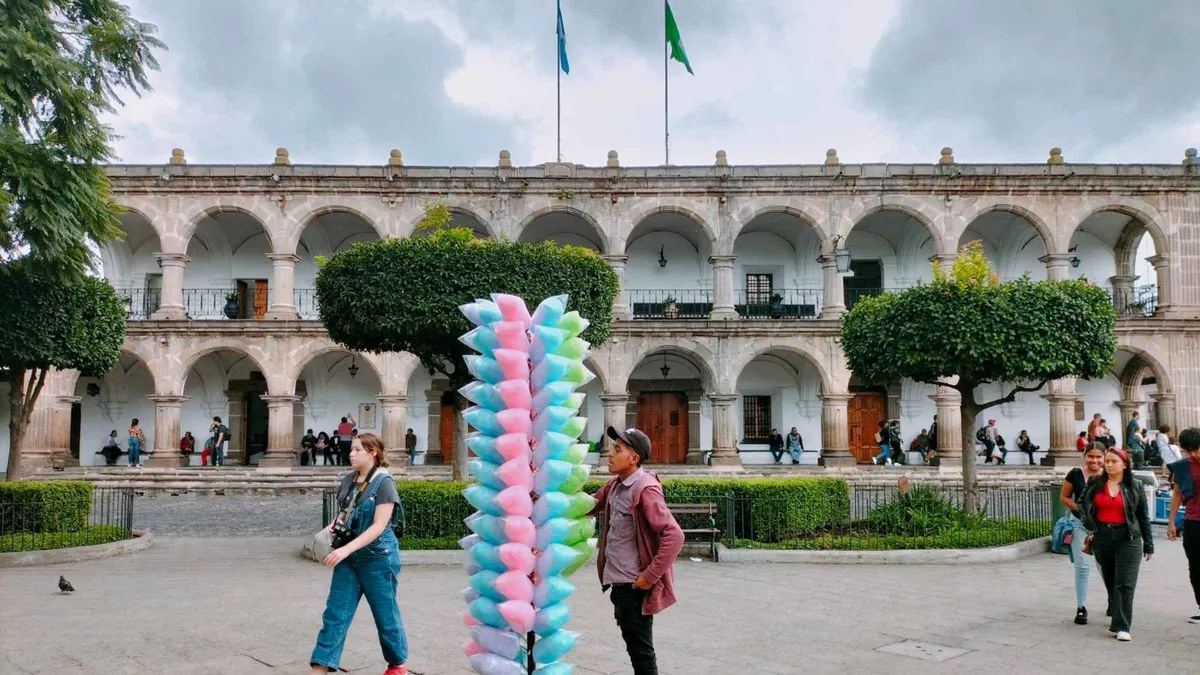 from $25
Antigua walking tour: Highlights, history, culture.
A cheaper 2.5-hour walking tour over the same ground as the top-rated one; fine if you just want orientation.
Check AvailabilityPrices, ratings and details are the platform's own. dollar figures are the listed prices — the platform bills in your account's currency.
What San Francisco is
Before you step through the door it helps to know what this building has been through. San Francisco is not a preserved monument, it is a working parish that happens to carry the Franciscan history of an entire colonial capital on its shoulders.
A working church with a long memory
The Franciscans arrived early and the record shows their first chapel was already damaged in 1565. A new sanctuary rose in 1579, two blocks away from the original spot, and 16th-century fabric from that phase survives in the record. The church you visit today is the third act: it was built by Diego de Porres, the leading builder of his generation in the city, and inaugurated in 1702. The style is Spanish seismic baroque, a way of building that accepted from the start that the ground moves, and its most distinctive ornament is the Salomonic column, the twisted spiral column that climbs the facade and gives the church its recognisable silhouette.
That seismic logic turned out to be necessary. The church has a quake biography few buildings anywhere can match, and reading the walls is part of the visit.
Today the address does double duty. It is a parish where locals worship, and it is one of Central America's most important pilgrimage destinations because of who lies buried here. You will see both realities at once: worshipers in the pews and travellers photographing the spiral columns, sometimes in the same frame.
The earthquake biography
The list of earthquakes reads like a history of the city's misfortunes. The church was damaged in 1717 and again in 1751. The Santa Marta earthquakes of 1773, the disasters that led the colonial government to abandon the capital and move to what is now Guatemala City, partly destroyed the building. In the modern era the great quakes of 1917 and 1976 caused further damage.
What makes San Francisco unusual is what happened next. In many Antigua churches the ruined sections were simply left as romantic ruins. Here the ruined section was not rebuilt until 1967, which means it stood as a fragment for nearly two centuries. Part of the ruins remain today beside the working church, and walking between the live nave and the rebuilt-then-ruined section is the clearest lesson in the city's seismic history you can get in one stop. The timeline below lays the dates out in order.
Parish and pilgrimage at one address
The dual character is the point of the visit. Approach it as history and you get baroque architecture, a named colonial architect and a two-century ruin. Approach it as a pilgrim and you get the tomb of a saint, queues of the faithful and a side chapel kept by his cult.
Most visitors get both whether they planned it or not, because the shrine sits inside the church and the ruins stand beside it. Our advice in the section on time below reflects that: the tomb visit comes first, the ruins second.
Santo Hermano Pedro and the shrine
The reason most Guatemalans come here has a name, a tomb and a story that changed this church's role entirely. Understanding Brother Pedro, even in broad strokes, turns a quick photo stop into a visit that makes sense.
Who Brother Pedro was
Pedro de San Jose Betancur, known across the Spanish-speaking world as Santo Hermano Pedro or Saint Brother Pedro, was a Franciscan lay brother who worked in Antigua in the 17th century among the poor, the sick and the abandoned. He founded a hospital and a religious order devoted to that work, and his reputation for humility made him one of the most loved figures in the city's history. When he was beatified in 1980 and canonized in 2002, becoming Guatemala's first saint, the church that holds his tomb became a destination for the whole region.
The connection to the wider city is physical. La Merced, the other great procession church of Antigua, is a stop on the Brother Pedro Route, so the two churches are linked in the pilgrim geography of the city as well as in style. If you come to San Francisco for the saint, La Merced is the natural second church.
What the pilgrimage looks like on the ground
His tomb draws thousands of pilgrims annually, and on a normal day you will see the mechanics of a living shrine rather than a museum. People queue quietly at the tomb, sometimes for a long time on feast days. Written petitions are left at the shrine, folded notes asking for work, health, a safe journey north or a recovered relationship. Candles burn in racks near the chapel. Nobody orchestrates this for visitors, it simply happens every day around you.
The etiquette that follows is simple. Keep your voice low in the shrine area, let the queue work at its own pace, and do not point camera lenses at people mid-prayer. The best photography here is of the architecture and the candlelight, not the faithful.
The Capilla del Santo Hermano Pedro
Beside the main church stands the Capilla del Santo Hermano Pedro, the chapel his cult keeps, and it deserves deliberate attention rather than a walk-through. Inside, the devotion is at its most concentrated, in the same seismic-baroque language as the 1702 church beside it.
One honest caveat. A dedicated Brother Pedro museum is reported, but its existence, price and hours are not stated in any official source we could check, and the church has no website with its content retrievable. Do not build your visit around a museum visit. Build it around the tomb, the chapel and the ruins, all of which are reliably there.
How much time to give San Francisco
No official source states how long a visit takes, which is normal for a church with no visitor centre and no published hours. Our routing below is an editorial estimate based on how the complex lays out: shrine and tomb first, ruins after, with the option of folding the whole southern corner into a longer morning.
| Routing | Time inside | What it covers | Skips / adds |
|---|---|---|---|
| Tomb visit | about 15 minutes | The shrine and the tomb of Santo Hermano Pedro | Skips the ruins section |
| Standard visit | 30-45 minutes | Church, tomb, Capilla and the ruins | The default routing |
| South-corner morning | about half a day | San Francisco plus the Santa Clara ruins plus the cathedral | The pairing that works on foot |
Our routing advice
A pure pilgrimage visit needs about 15 minutes. The standard visit, covering the church, the tomb, the Capilla and the ruins section, runs 30 to 45 minutes and is what we recommend for almost everyone. If you are spending a morning on the southern corner of the grid, add the Santa Clara ruins and the cathedral and you have a half day that never needs a vehicle.
The church in dated lines
-
1565
The first chapel is damaged
The Franciscans' first chapel on this spot suffers damage early in the city's history.
-
1579
A new sanctuary two blocks away
A new sanctuary is built nearby, and 16th-century fabric from this phase survives in the record.
-
1702
The current church is inaugurated
Diego de Porres builds the church that stands today, in Spanish seismic baroque with Salomonic spiral columns.
-
1717 and 1751
Earthquake damage
Two major quakes damage the building in the 18th century.
-
1773
Partly destroyed
The Santa Marta earthquakes partly destroy the church, and the colonial capital is abandoned.
-
1917 and 1976
The modern quakes
Further damage comes in the earthquakes of the 20th century.
-
1967
The ruins section is rebuilt
The ruined section, unrebuilt for nearly two centuries after 1773, is finally rebuilt, with part of the ruins remaining.
-
1980
Brother Pedro is beatified
Peter of Saint Joseph Betancur is beatified by the Catholic Church.
-
2002
Canonization and the pilgrimage
He is canonized, and his tomb at this church becomes the pilgrimage focus it remains.
Sources: the English Wikipedia record and Wikidata Q3670022 via facts-pack-1, plus the English Wikipedia biography of Peter of Saint Joseph Betancur fetched for this page for the saint's identity only, checked at this site's source packs.
Dos and don'ts at San Francisco
Do
- Dress for a working church, with covered shoulders, because this is an active parish and a pilgrimage site, not a ruin you wander through in beachwear.
- Come on a weekday morning for a calm shrine, when the queues at the tomb are short and the light is good on the facade.
- Light a candle or leave a written petition as pilgrims do, which is the most direct way to understand why this place matters to people.
- Walk the ruins wall after the shrine, because the broken section beside the church tells the earthquake story better than any plaque.
- Combine with the Santa Clara ruins three minutes southwest for a tight southern-corner pairing that needs no vehicle.
Don't
- Don't photograph pilgrims mid-prayer, the tomb and shrine are places of active devotion and the people queuing there deserve their privacy.
- Don't expect a posted fee or hours, because none are published anywhere and the church has no website, so asking at the door is the only way to know.
- Don't plan a museum visit, since no Brother Pedro museum is documented with a price or hours in any official source.
- Don't drive to the door, the streets here are narrow cobbles, and if you need a ride a tuk-tuk costs the municipal tariff of $1.31 (Q10) per in-town ride.
- Don't skip the side chapel, because the Capilla del Santo Hermano Pedro with its spiral columns and shrine is the point of the complex.
Getting there
San Francisco sits at the quiet southern end of the historic grid, which makes it one of the easiest major sights in the city to reach on foot and one of the least crowded.
On foot from the centre
The church stands about five blocks south of Parque Central on the southern edge of the grid, an estimate from the coordinates rather than a surveyed figure. The walk from the Parque Central fountain is flat, on cobbles, and takes you through a stretch of the city most visitors never turn down into, which is part of the charm. Head south from the square, keep going until the blocks start feeling residential, and the baroque facade appears on your left.
If your legs or the heat argue against the walk, tuk-tuks cover the whole town. The municipal tariff is $1.31 (Q10) per in-town ride, cash, and it is worth agreeing the fare before you get in, because drivers routinely quote visitors more than the official rate.
The position also makes the church a natural corner from which to continue. The Santa Clara ruins are about three minutes southwest, so a loop that takes in the church, the ruins and the centre works cleanly without backtracking.
Five things most visitors do not know
The church rewards anyone who arrives knowing a little more than the guidebook paragraph. These five points change how you look at the place.
Five details worth carrying with you
list:
- The ruins played the Green Goddess temple in The New Adventures of Tarzan in 1935, so the broken walls beside the church have a Hollywood credit [English Wikipedia via facts-pack-1].
- Eadweard Muybridge, the pioneer of motion photography, photographed the ruins in 1875, long before they were rebuilt [English Wikipedia].
- The ruins section stood unrebuilt for nearly two centuries, until 1967, which is why its stonework reads differently from the 1702 church [English Wikipedia].
- The current church and the Capuchinas convent share the same architect, Diego de Porres, whose signature style you can compare across both sites [English Wikipedia via facts-pack-1].
- No fee or visiting hour for the shrine exists in any official source, which is why this page prints the finding and not a number [facts-pack-1 not-stated list].
San Francisco church map
Pins from the Wikidata items behind each page via facts-pack-1, except Santa Clara, whose coordinate comes from OpenStreetMap way 402712345.
What to pair with San Francisco
The church anchors the southern corner of the grid, and everything worth pairing with it sits within a short flat walk or one steady climb. These four pairings are the ones that work in practice, ordered by distance from the door.
Santa Clara ruins
The roofless baroque nave of the Santa Clara convent sits about three minutes southwest of the church, making it the shortest and best pairing on this list.
3 min walkCathedral
The cathedral block north of the church carries its own quake record from the 1773 Santa Marta earthquakes, and the two ruins read well together.
6 min walkCasa Santo Domingo
The monastery museum complex northeast of the church opens its museums Monday to Saturday 9:00 to 18:00 and Sunday 11:00 to 18:00.
10 min walkCerro de la Cruz
The viewpoint hill above the city has a signposted trail taking about 20 to 30 minutes from the historic centre, and rewards the climb with the classic city-and-volcano view.
20 min walk uphillSan Francisco church questions
How much does it cost to visit San Francisco church?
Not stated. No entry price for the church, the shrine or the Capilla del Santo Hermano Pedro is published anywhere, and the church has no website, only a Facebook page whose content is not retrievable. Carry small notes in case a donation is asked at the shrine, but do not trust any figure you read elsewhere, including ours, because none exists.
What are the San Francisco church hours?
Not stated. No official source publishes visiting hours and the church is a working parish, so worship times govern access. Morning is the reliable window, before the tour groups arrive and before the midday heat, and a service will always trump sightseeing.
Where is the tomb of Santo Hermano Pedro?
Inside the church. Brother Pedro, canonized in 2002 after his beatification in 1980, is enshrined at the site and his tomb draws thousands of pilgrims every year. Expect a quiet queue and racks for candles and written petitions beside it.
Can you visit the San Francisco ruins?
Yes, the partly ruined section stands beside the working church, the part that was destroyed in 1773 and not rebuilt until 1967. The ruins are part of what a visit here covers, though the precise access terms are not published anywhere, so follow whatever arrangement is in place on the day.
Is San Francisco church worth visiting?
Yes, with honest caveats. The shrine is genuinely important, the 1702 baroque facade with its spiral columns is one of the city's best, and the quake record written into the walls spans 1717 to 1976. The caveats: no published hours means timing is a judgement call, and if you expected a museum experience, none is documented. Come for the shrine and the history and it repays the walk south.
Do you need a guided tour for San Francisco?
No, you can walk in and see it independently, and many visitors do. What a guide adds is the Franciscan story and the earthquake timeline, which the walls do not explain themselves. The city highlights walk names this church on its route, so it is the straightforward option if you want the context.
San Francisco on film
Three clips that show the complex from the street, the facade and the ruins before you go.
Video Ruinas y Museo Convento San Francisco
A pass through the ruins and convent that shows the whole complex.
Video: San Francisco El GrandeWalking around by the Church of San Francisco in Antigua Guatemala!!!
The street approach and facade as you will meet them.
Video: Key_PerspectivesIGLESIA SAN FRANCISCO EL GRANDE (DETAILS IN THE DESCRIPTION)
The facade and interior details at a slow pace.
Video: VidaAntigua . comVideos load from YouTube only when you press play.
Where the church fits in a day
San Francisco works best as the opening act of a southern-corner day rather than a destination on its own.
A routing that works
Start at the church in the morning, when the shrine is calm and the light is on the facade. Give the tomb and the Capilla their 15 minutes first, then walk the ruins wall. From there it is about three minutes southwest to the Santa Clara ruins, an easy next stop while your legs are fresh.
Midday belongs indoors and away from the sun, so head for the mercado for lunch and the bustle of the market halls. In the afternoon, work your way back north through Capuchinas and finish at the cathedral, whose ruined block pairs naturally with everything you saw in the morning. If you want more ideas beyond this corner, our things to do page assembles the full shortlist.
Prices, hours and terms are set by the venue or operator and confirmed at checkout.
We may earn a commission if you book through one of our links, at no extra cost to you. Full affiliate disclosure