 Antigua Guatemala City Guide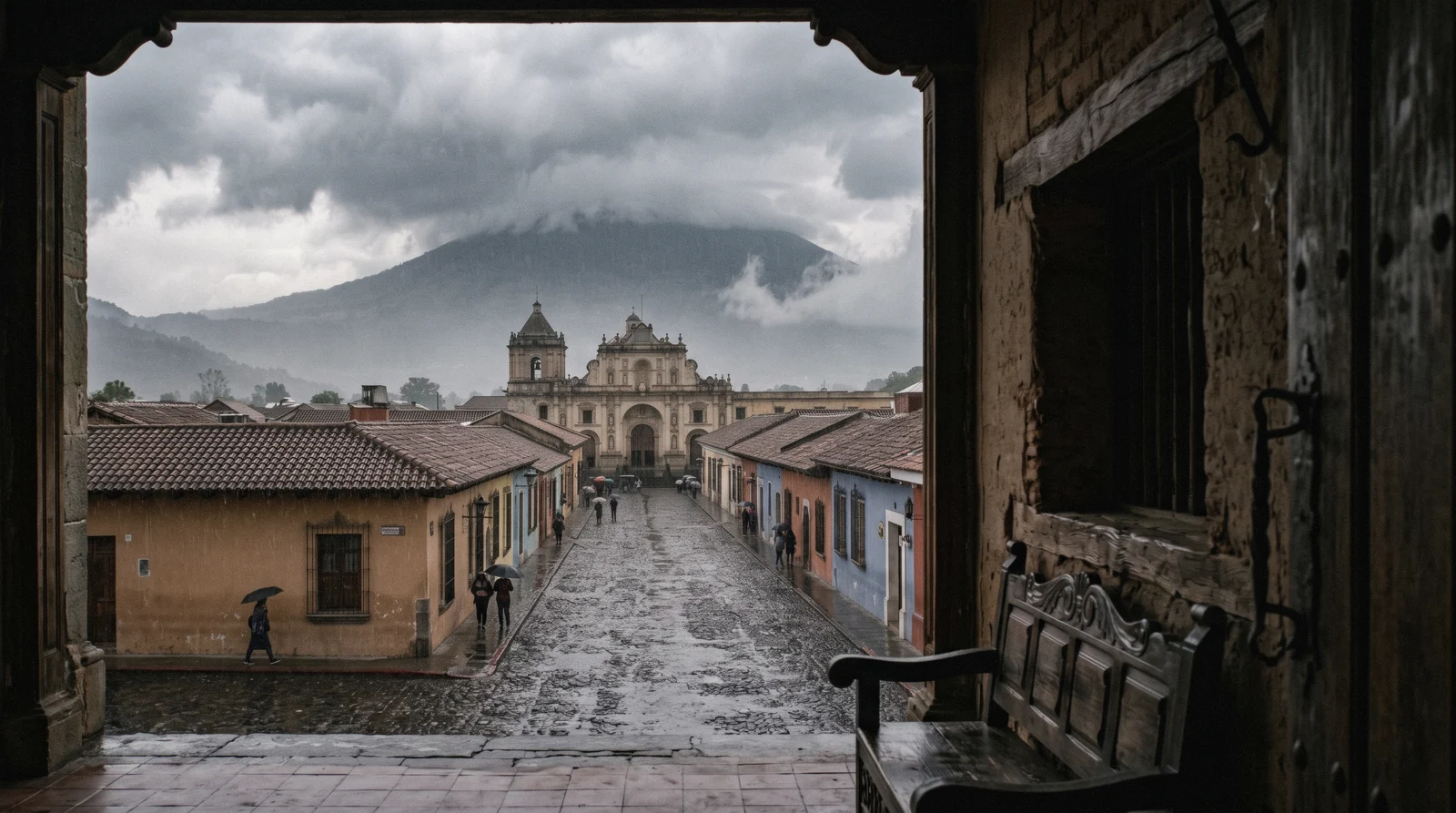
Antigua Guatemala Weather: Climate, Rain and Altitude
Antigua Guatemala weather is not what most people expect from Central America. The city sits high enough that the temperature curve stays almost flat all year, with average highs between 23.5 and 27.0°C (74 and 81°F) in every month of a thirty-year record. What changes is the rain. Roughly 1,632 mm falls in a typical year, almost all of it between May and October, while November through April stays dry. The numbers on this page come from the ERA5 archive covering 1995 to 2024, computed for the grid cell directly over the city. Start with the monthly table below, then decide your dates with the month-by-month decision page, and find practical detail for every subject in the Antigua Guatemala city guide.
Quick answer
Antigua Guatemala weather is spring-like all year because of altitude. Average highs run 23.5 to 27.0°C (74 to 81°F) in every month, and nights stay cool in all twelve. Annual rain is about 1,632 mm. The dry season runs November to April. September is the wettest month, with 311.4 mm across about 28 rainy days, and in the wet months the rain falls mostly in the afternoons after a bright morning. January brings the coldest nights of the year at 13.6°C (56°F), so a warm layer is not optional.
Key takeaways
- The dry season is November to April and the rainy season May to October. The full numbers sit in the twelve months table.
- Altitude flattens the temperature curve and cools the nights. See what the altitude does.
- July carries the canícula, a dry spell inside the rains. Read about the dry spell inside the wet season.
- For routing your dates, start with the best time to visit and the dry-season spectacle of Semana Santa.
The Twelve Months, From Thirty Years of Data
Every figure here is the 1995–2024 monthly mean computed from the ERA5 archive for the grid cell over the city (elevation 1,542 m). Highs and lows are Celsius with Fahrenheit on first mention. Rain is the monthly millimetre mean and rainy days count days with at least 1 mm. Figures current in Q3 2026.
| Month | High / low | Rain | Rainy days | What it means |
|---|---|---|---|---|
| January | 24.7 / 13.6°C (76 / 56°F) | 6.8 mm | 2.5 | Driest month. Coldest nights of the year, a fleece at dinner |
| February | 26.0 / 14.0°C (79 / 57°F) | 9.9 mm | 3.2 | Still bone-dry. Days warming |
| March | 26.9 / 14.9°C (80 / 59°F) | 30.0 mm | 8.0 | Warmest stretch begins. First real rain late in the month |
| April | 27.0 / 16.0°C (81 / 61°F) | 78.5 mm | 16.0 | Hottest month. The shoulder, rain about every other day by late April |
| May | 25.5 / 16.8°C (78 / 62°F) | 213.5 mm | 25.5 | The wet season proper arrives. Afternoons belong to the rain |
| June | 24.0 / 16.6°C (75 / 62°F) | 300.4 mm | 25.8 | Second-wettest month |
| July | 24.6 / 16.1°C (76 / 61°F) | 171.4 mm | 20.0 | The canícula dip, read the dry spell inside the wet season |
| August | 24.7 / 16.2°C (76 / 61°F) | 218.9 mm | 22.9 | Back to full wet-season pattern |
| September | 24.0 / 16.2°C (75 / 61°F) | 311.4 mm | 27.8 | Wettest month, rain on about 28 days |
| October | 23.5 / 15.8°C (74 / 61°F) | 226.5 mm | 22.1 | Still wet. The count starts falling |
| November | 23.5 / 14.7°C (74 / 59°F) | 54.2 mm | 9.2 | The shoulder back to dry. Landscape at its greenest |
| December | 24.2 / 13.9°C (75 / 57°F) | 10.2 mm | 2.8 | Dry season opens. Nights noticeably cooler |
The annual total comes to about 1,632 mm across the twelve months. April is the warmest month on the thirty-year mean and January the one with the coldest nights. The temperature curve is flat, the rain curve is not.
The Year at a Glance
Average monthly high temperature in Celsius with Fahrenheit underneath, from the same ERA5 thirty-year series. The bands are the seasons the data shows, not opinion.
April is the warmest month at 27.0°C and September the wettest at 311.4 mm. July's dip against its neighbours is the canícula signal in the data.
What 1,530 Metres of Altitude Does
Antigua sits at about 1,530 m (5,013 ft) above sea level. The ERA5 grid cell used for the climate table on this page reads 1,542 m, which is consistent with the commonly cited figure for the city itself. That elevation is the single most important fact about Antigua Guatemala weather, because it does two things at once.
First, it flattens the temperature curve. Average highs run between 24 and 27°C (75 and 81°F) in every month of the thirty-year record. April, the warmest month, is only about 3.5°C warmer than October, the coolest.
There are no seasons of heat here in the way a lowland tropical city has them. The thermometer does not tell you what month it is. Second, altitude cools the nights.
Average lows drop to 13.6°C (56°F) in January and stay near 14°C (57°F) through February. Nights in the 50s °F are normal year-round, even when the afternoon reached the high 70s. The dry-season months are the ones where this bites hardest, because clear skies let the heat escape after sunset.
The practical consequences are simple. Pack layers. Bring a real jacket for after dark, not just for volcanoes.
The evening chill catches travellers who packed believing Central America means heat everywhere, and they spend the first dinner of the trip shivering in a t-shirt while locals wear denim. Altitude also strengthens the sun. The ultraviolet load at 1,500 m is noticeably higher than at sea level, and sunburn on a mild 24°C day is a routine event here.
Sunscreen is a dry-season and wet-season item alike. Finally, half the year the one two-word forecast that matters is afternoon rain. It is the pattern the next heading unpacks, and it shapes how each wet-season day should be spent.
When the Rain Actually Falls: Afternoons
The wet season runs May to October, and the first thing to understand is that it does not rain all day. The working pattern in the wet months is a bright morning, cloud building over the volcanoes from midday, and a heavy late-afternoon or evening shower that usually clears by dark. Mornings are reliable.
Afternoons are not. The monthly totals make the season's weight clear. September is the wettest month of the thirty-year record with 311.4 mm spread across about 28 rainy days, which means it rains on nearly every day but rarely for long.
June follows with 300.4 mm across 25.8 rainy days, and May opens the season with 213.5 mm on 25.5 days. August and October run in the 219 to 227 mm range. The shoulders behave differently.
November drops to 54.2 mm on 9.2 rainy days, and April rises to 78.5 mm on 16 days as the season approaches. The dry core of December to February is a different world: between 6.8 and 9.9 mm a month on 2.5 to 3.2 rainy days. You can travel for two weeks in January without seeing a drop.
Route the day around the pattern. Ruins, Cerro de la Cruz and any viewpoint belong in the morning, when the sky is clearest and the light is best for the volcano backdrop. Lunch is your indoor block.
Markets, museums and covered shopping fill the wet afternoon without loss. This scheduling trick turns the rainy season from an obstacle into a rhythm. Two practical warnings.
Wet cobblestones are slick, and Antigua is paved with them, so grip-soled shoes matter from May to October. And the afternoon shower can be heavy enough to flood streets briefly, so keep electronics in a dry bag. For the full indoor set on a wet day, see things to do.
The Canícula: The Dry Spell Inside the Wet Season
The canícula, sometimes called a veranillo or little summer, is a dry spell that lands in the middle of the rainy season. It is not a myth or a local saying. It shows up in the data.
Look at July in the table above. It averages 171.4 mm of rain, while August next door takes 218.9 mm and June takes 300.4 mm. That dip in the middle of the wettest part of the year is the canícula's signature in the thirty-year record, and July's rainy-day count falls to 20.0 from June's 25.8.
The spell is forecast officially. Guatemala's meteorological service, INSIVUMEH, issues a seasonal forecast each year. For the current season it expected the canícula to begin in early or mid July, to run up to about 40 days, and to end between about 20 July and 10 August in a typical run.
During the spell, rainfall drops to roughly 25 to 50 percent below normal for the period. What does that mean for a trip? Mid-July can behave like a shoulder month.
Mornings are clear, afternoons less reliably wet, and the landscape is still green from the early rains. Hikers and photographers rate this window highly. But plan for the wet season anyway.
The start date and length of the spell move from year to year, so a given week in July is never guaranteed to be dry. The sensible approach is to book the wet-season itinerary and treat the canícula as a bonus if it lands on your dates. Check INSIVUMEH's seasonal forecast close to booking rather than trusting the calendar alone.
Forecasts, Microclimates and Volcano Weather
Antigua's valley sits under three volcanoes, which means the forecast for Antigua and the sky over your rooftop can disagree. Cloud pours over the ridges while the town stays dry, or the reverse. Treat any single-point forecast as a hint, not a promise.
Remember what the table on this page is. It is a thirty-year normal, useful for choosing a month and useless for choosing a Tuesday. For the next ten days, use a proper forecast service rather than climatology.
Weather matters most at elevation. Summit conditions on Pacaya and Acatenango are their own microclimate, far colder and windier than town, with rain that turns hail-like at altitude. A 24°C afternoon in Antigua says nothing about what you will meet above 3,000 m, and summit gear is a separate packing problem from town gear.
There is also a status gate that overrides all weather planning. Fuego and Acatenango summit hikes are suspended under CONRED's orange alert, with no reopening date announced. Pacaya is open.
Check the current situation on the Pacaya page before you commit to any volcano plan. The official advice, repeated by the UK Foreign Office, is to check CONRED, Guatemala's disaster agency, and the Guatemalan met office before any volcano hike. Status changes with volcanic activity, not with the seasons, so a hike that was fine last month may not be fine now.
Weather forecasts tell you whether you will be comfortable. CONRED tells you whether you can go at all.
What the Weather Means for Your Plans
The dry months of November to April are the classic window, and the data backs the reputation: December and January average under 11 mm of rain a month on fewer than three rainy days. If you want maximum certainty for outdoor days, that is the stretch to book. Weigh the timing in detail on the best time to visit page.
One calendar event sits inside the dry season and bends everything around it. Semana Santa, Holy Week, brings the city's biggest spectacle and its biggest crowds, with processions and street carpets through the historic center. The weather is usually on its best behavior, which is part of why the whole country shows up.
Plan far ahead for Semana Santa or accept that rooms near the procession routes will be gone. The wet season has a real case of its own. The landscape is at its greenest, crowds are thin, and the afternoons-only rain pattern means mornings that work for everything outdoors.
September's 311.4 mm sounds heavy, but spread over about 28 short showers it leaves the whole morning free, every day. When to avoid the town on weather grounds alone: late September and October, the two months where the afternoon rain is close to a daily certainty rather than a rhythm. Everything else in the wet season is a scheduling problem, not a reason to stay home.
Volcano hiking depends on CONRED status, not the season. As of the latest check, Fuego and Acatenango summit hikes are suspended under the orange alert and Pacaya is open, so confirm before booking rather than assuming the dry season solves it. When rain does land on your day, the city carries it.
Museums, chocolate workshops and coffee tours are all indoor or covered activities, and the afternoon shower is exactly when they shine. Build your wet-day shortlist from things to do before you arrive, and the weather stops being a risk.
What to Pack for Antigua's Weather
The packing list the data dictates is short. Work through it item by item. Sun protection comes first.
At about 1,530 m the sun is stronger than the mild temperatures suggest, and sunburn on a 24°C day is routine here. Sunscreen, a hat and sunglasses belong in the bag in every month, dry or wet. A light rain shell covers half the year.
From May to October the monthly totals range from 171.4 mm to 311.4 mm, and even November and April carry 54.2 mm and 78.5 mm respectively. From December through February you can leave it at the hotel, since those months run under 11 mm. Even in the dry months, a shell earns its place on cool evenings.
A warm layer is not optional. Average lows sit between 13.6 and 14°C (56 to 57°F) from November to February, and nights in the 50s °F are normal year-round. A fleece or sweater for dinner and after dark is the item most travellers wish they had packed.
Shoes with grip matter in the wet months. Rain on Antigua's cobblestones makes them slick, and September's 28 rainy days mean wet stone underfoot most days. Save the smooth-soled shoes for the dry season.
Quick-dry clothing wins from May to October, when laundry may not dry overnight. Cotton takes a day and a half in the wet season. An umbrella works in town, where streets are narrow and the showers are short.
A hooded shell wins on the mirador and any viewpoint, where the wind turns umbrellas inside out. Tie every item to the figures in the table above and you will pack once, correctly.
The Thirty-Year Record, and What It Cannot Tell You
Every number on this page comes from one place, and it is worth understanding what that place is. The figures are monthly means computed from the ERA5 archive, a reanalysis of observed weather covering 1995 to 2024, pulled for the grid cell directly over the city at coordinates that resolve to an elevation of 1,542 m. A reanalysis is not a single thermometer: it is a physical model of the atmosphere constrained by decades of real observations, which is why it can produce a stable normal for a valley town whose own station record is patchy.
Thirty years is long enough that a wet month and a dry month cannot swap places inside it, which is the whole point of publishing one. What a normal cannot do is tell you about a specific afternoon. The table counts a rainy day as any day with at least 1 mm of precipitation, which is why September shows rain on about 28 days without meaning twenty-eight all-day washouts.
It averages away the hour of the day, which is exactly the detail that matters here, and it says nothing about wind, humidity or the view from the mirador on your particular morning. Use it to choose a month and a packing list, as above. Use a live forecast, and your own eyes at breakfast, for the day itself.
And use the climatologist's own caveat: the canícula section is the one place where a seasonal forecast, not a normal, is the right tool, because a dry spell inside a wet season is an event, not an average.
What Works in Any Month
Four bookings whose days are structured indoors or at altitude where weather matters less, prices and ratings are the platform's own.
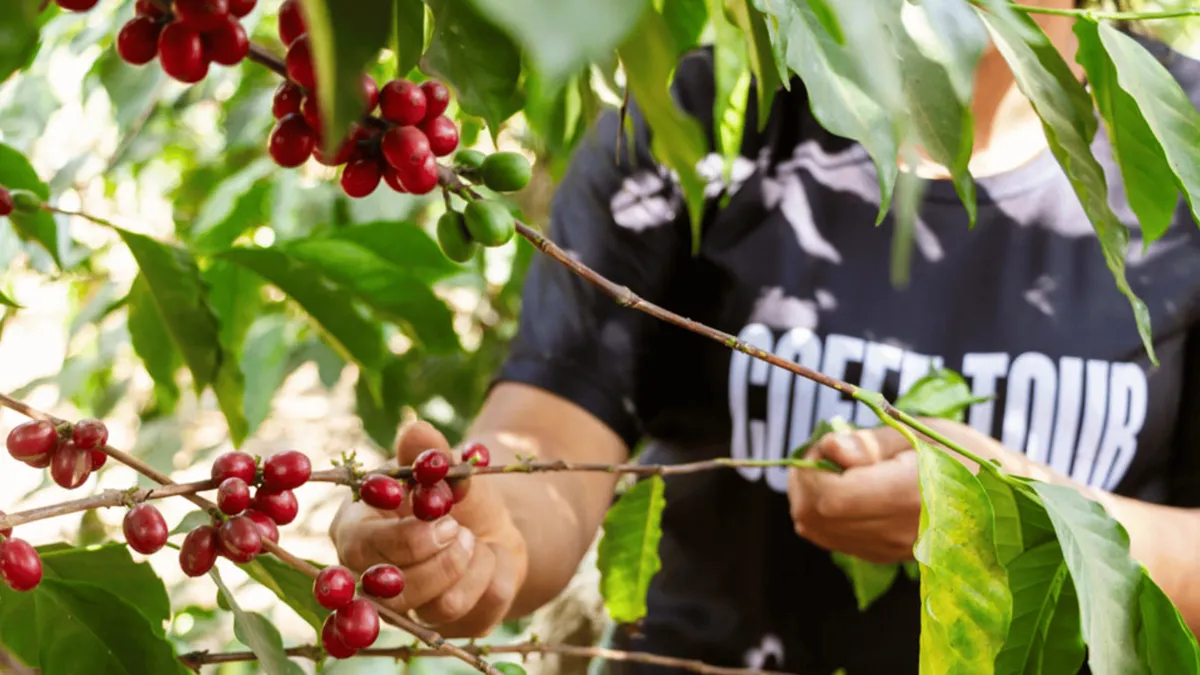 from $69
Coffee Tour in Antigua Guatemala
3.5-hour small-group coffee tour from cherry to cup on an Antigua finca; pickup included.
Check Availability from $38
Antigua Guatemalan Authentic Cooking Class Chef David Farfan
Three hours with Antigua's TV chef cooking pepian and tortillas; market tour optional.
Check Availability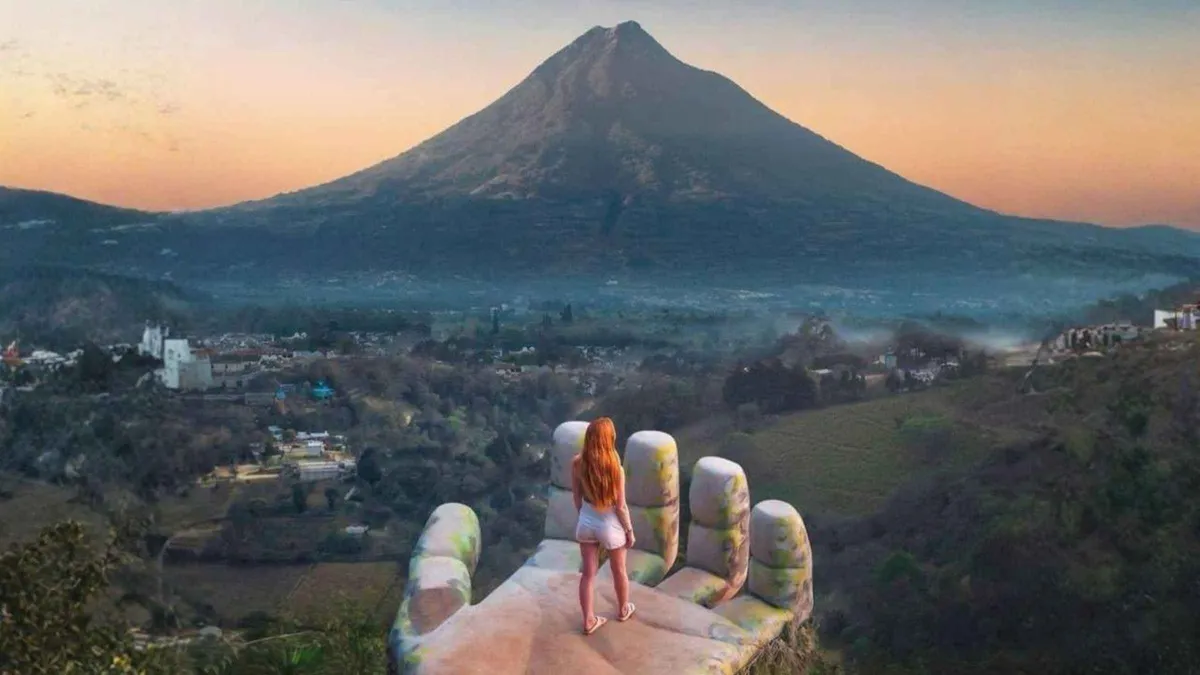 from $35
Antigua: Hobbitenango Eco-Park & Cerro de la Cruz Tour
Shuttle out to Hobbitenango plus a Cerro de la Cruz stop - the ridge and the viewpoint in one half-day.
Check Availability from $25
Antigua Guatemala: City Highlights Guided Walking Tour
2.5-hour small-group walk through the grid with a licensed guide; the fastest way to make the ruins and churches mean something.
Check AvailabilityPrices, ratings and details are the platform's own. dollar figures are the listed prices — the platform bills in your account's currency.
Next
Best time to visit
The decision this page feeds, turn the monthly data into dates: when to come.
What a day costs
The wet months and the dry months price the same activities, the numbers: what a day costs.
Semana Santa and the city guide
The dry-season spectacle, with everything else in the Antigua Guatemala city guide.
Antigua Guatemala Weather: Questions
What is the driest month in Antigua Guatemala?
January is the driest month in the thirty-year record, with 6.8 mm of rain on an average of 2.5 rainy days. December is nearly as dry at 10.2 mm on 2.8 days, and February runs 9.9 mm on 3.2 days. Together these three months form the dry core of the year, when you can travel for two weeks without seeing rain. The trade-off is the year's coldest nights, with January averaging a low of 13.6°C (56°F), so a warm layer still belongs in the bag. The full month-by-month figures sit in the twelve months table.
When is the rainy season in Antigua Guatemala?
The rainy season runs from May to October. It opens with 213.5 mm in May, peaks in September at 311.4 mm across about 28 rainy days, and tapers through October's 226.5 mm. November is the shoulder back to dry at 54.2 mm. The important detail is timing within the day: in the wet months the rain usually arrives in the late afternoon after a bright morning, so the season is manageable rather than miserable. Route viewpoints and ruins into the morning and museums into the wet afternoon. See when the rain actually falls for the full pattern.
Does it rain all day in the wet season?
No. The typical wet-season day starts bright, with cloud building over the volcanoes from midday and a heavy shower arriving in the late afternoon or evening, usually clearing by dark. Even in September, the wettest month at 311.4 mm, the rain is concentrated into short afternoon bursts on about 28 days. That rhythm lets you plan a full day: ruins and viewpoints in the morning, lunch indoors, markets and museums into the shower. Pack grip shoes, because wet cobblestones are slippery. More routing ideas are in what the weather means for your plans.
Is Antigua Guatemala at high altitude?
Yes. The city sits at about 1,530 m (5,013 ft), and the climate data grid cell over it reads 1,542 m. The effect is a spring-like climate all year: average highs between 23.5 and 27.0°C (74 and 81°F) in every month, with no season of real heat. The second effect is cool nights, with lows of 13.6 to 14°C (56 to 57°F) from November to February, so bring a warm layer. The third is stronger sun at altitude, which sunburns on mild afternoons. See what the altitude does for the practical consequences.
What is the hottest month in Antigua Guatemala?
April is the warmest month on the thirty-year mean, with an average high of 27.0°C (81°F) and an average low of 16.0°C (61°F). March runs close behind at 26.9°C. It is worth noting that April is also the shoulder into the rains, with 78.5 mm on 16 rainy days as the wet season approaches, so late April brings rain about every other day. The whole year's temperature range is narrow, only about 3.5°C between the warmest and coolest monthly highs, which is the altitude talking. Compare all twelve months in the twelve months table.
Is the sun stronger in Antigua Guatemala?
Yes, and it is the altitude talking. At about 1,530 m the ultraviolet load is noticeably higher than at sea level while the air stays mild, so sunburn on a 24°C (75°F) afternoon is a routine event rather than a beach-only risk. Sunscreen, a hat and sunglasses belong in the bag in every month, dry season or wet. The same altitude that strengthens the sun cools the nights, which is why the packing list carries both sunscreen and a fleece. The details are in what the altitude does.
How much rain falls in Antigua Guatemala in a year?
About 1,632 mm in a typical year on the 1995–2024 record, and the distribution matters more than the total. Roughly nine tenths of it falls in the May-to-October wet season, with September alone carrying 311.4 mm and June 300.4 mm, while the December-to-February core manages under 11 mm a month. November and April are the shoulders at 54.2 mm and 78.5 mm. That skew is why the same city can promise two rain-free weeks in January and hand you a daily afternoon shower in September. The monthly split is in the twelve months table.
What is the canícula?
The canícula, also called a veranillo, is a dry spell that lands in the middle of the rainy season, typically starting in July. Its signature shows in the data: July averages 171.4 mm of rain against 300.4 mm in June and 218.9 mm in August. INSIVUMEH, Guatemala's met service, forecasts it each season. For the current season it expected the spell from early or mid July, running up to about 40 days and usually ending between about 20 July and 10 August, with rainfall 25 to 50 percent below normal. Read more in the canícula.
Antigua's Skies on Film
Three on-the-ground films, useful for what the averages cannot show, cloud, light and the volcanoes.
4K Guatemala Walk 🇬🇹 Antigua City Center | A Beautiful Colonial City Surrounded by Volcanoes
A ground-level walk through the center under the kind of volcanic cloud bank the climate table cannot capture.
Video: 4K Walking TravelANTIGUA, Guatemala | 4K 60fps Walking Tour | The world's Most Beautiful Colonial City
Streets and rooftops in full light, a good reference for how bright the dry-season mornings actually are.
Video: EchoStepsAntigua Guatemala walking tour on historical center 4K
The historic center on foot, useful for judging street light and sky through the day before you pick a month.
Video: Wandering PeteVideos load from YouTube only when you press play.
Prices, hours and terms are set by the venue or operator and confirmed at checkout.
We may earn a commission if you book through one of our links, at no extra cost to you. Full affiliate disclosure