 Antigua Guatemala City Guide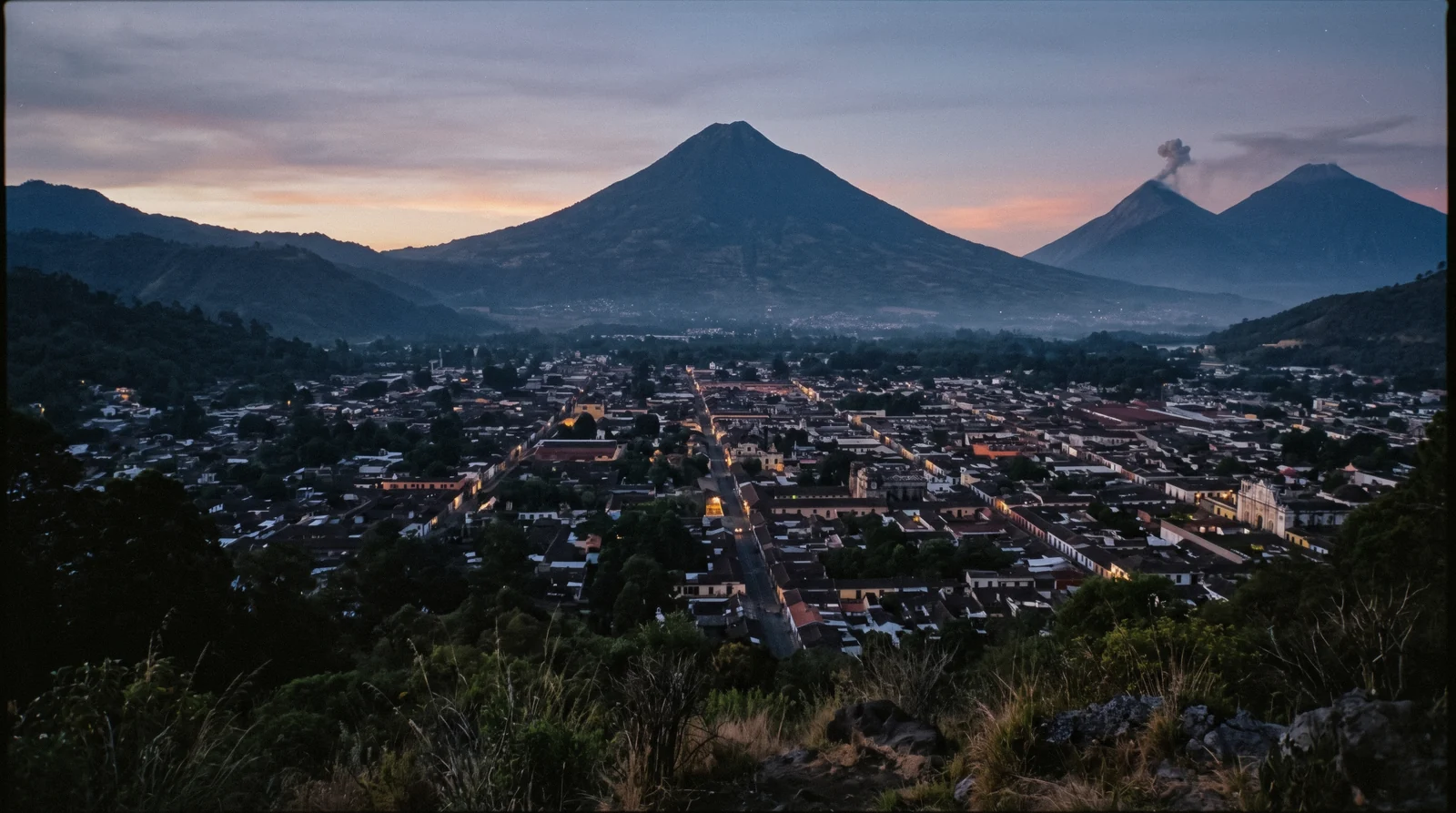
Is Antigua Guatemala Worth Visiting?
Is Antigua Guatemala worth visiting? Yes, and not in a postcard way: this is a UNESCO World Heritage grid, listed since 1979, sitting under three volcanoes at about 1,500 meters, compact enough to walk end to end and priced for pocket money once you are in it. INGUAT, the national tourism institute, recommends three to four days, which is more time than most cruise-ship itineraries give it and less than it deserves. This page makes the case with receipts, then argues the honest case against, because the two questions this verdict turns on, safety and the suspended volcano hikes, have real answers on our safety page and in every guidebook's fine print. The verdict is one page of the Antigua Guatemala city guide, whose homepage carries the rest of the decision.
Quick answer The verdict, the receipts, and the three caveats
Yes, Antigua Guatemala is worth visiting: a UNESCO World Heritage colonial grid since 1979, under the volcanoes Agua, Fuego and Acatenango at about 1,500 meters, walkable in a day and cheap on the ground, with a municipal Q10 ($1.31) tuk-tuk tariff and INGUAT recommending three to four days. The three honest caveats are that the Fuego and Acatenango summit hikes are suspended, the afternoons are wet from May to October, and the US advisory for Guatemala sits at Level 3.
Key takeaways
- The case in numbers: what the city costs and what it gives you for it, from the tuk-tuk tariff to the processions
- The caveats argued with sources, not vibes: the honest case against, including the summit suspensions and the advisory wording
- If the volcano question decides your trip, the open flagship is the Pacaya day hike, listed at $23 with the full Pacaya page beside it
- First-timer route planning starts on the things-to-do hub, which orders the grid by time needed
The case for, priced and compared
Every line below carries a source, because a verdict this easy to make should be just as easy to check.
The physical case: Antigua Guatemala has been on the UNESCO World Heritage list since 1979, and the fabric that earned the listing still works as a city, not a museum piece. The grid is flat and tight, with the cathedral block, the arch corridor and the baroque churches within a 20-minute walk of each other, and the whole scene is framed by Agua, Fuego and Acatenango, the volcano trio that the national coffee body names as the walls of the valley. At about 1,500 meters the climate stays mild enough to walk year-round, with average highs of 24.0 to 27.0 °C and nights cool enough to need the fleece you packed for the flight.
The economic case: once you arrive, the city is priced for pocket money. The municipality itself set the in-town tuk-tuk fare at Q10 ($1.31), the chicken bus to Guatemala City runs Q15 ($1.96) from the terminal behind the market, chocolate workshops start from $20, and a museum-and-minigolf compound like Finca La Azotea charges Q40 ($5.24) for its museums. The calendar adds value the rest of the year cannot: the municipal plan for the last Holy Week counted about 56 velaciones and 58 processions, an event scale few cities of this size approach, and it is planned, permitted and mapped by the municipality itself.
Prices in this section were current in Q3 2026.
The honest case against
Three caveats decide some trips, and each one has a source rather than a rumour.
The volcano caveat is the one with a date on it. The summit trails of Fuego and Acatenango, the overnight hike that filled a thousand group chats, have been suspended since 4 August 2026 under the CONRED alert, with no reopening date anybody is willing to predict, and this site does not sell them as bookable while that stands. Pacaya remains open and is the flagship day hike, but if your mental picture of Antigua requires an Acatenango summit at dawn, this is the wrong season to book the trip around it.
The status details sit on hiking near Antigua.
The weather caveat is seasonal, not absolute: the rains run May to October, September is the wettest month at 311 mm across roughly 28 rainy days, and the pattern pushes walking into mornings. The safety caveat needs the exact wording rather than the headline: the US advisory for Guatemala is at Level 3, Reconsider Travel, and the UK Foreign Office restricts only border strips near Mexico, naming nothing in Sacatepéquez, the department that holds Antigua. Neither advisory is a reason to skip the city.
Both are reasons to read the safety page before you book, and the month-by-month rainfall on the weather page.
Who should go, and who should skip it
The verdict changes by traveller, and pretending it does not is how disappointing trips get booked. This table is our read of the fit, built on the facts above.
The pattern in the table: Antigua rewards travellers who want a dense, walkable cultural base and punishes itineraries built around one marquee attraction that happens to be closed. If the closed attraction is your whole trip, wait for the reopening rather than resenting the substitution.
| Traveller | Verdict | Why |
|---|---|---|
| First-timers in Central America | Go | The grid is walkable, the landmarks are dense, and the practical layer from tuk-tuks to shuttles is simple and cheap |
| Holy Week planners | Go, and book early | The municipality counted about 58 processions in its 2026 plan. Nothing else in the calendar looks like it |
| Summit hikers | Not this season | Fuego and Acatenango summits are suspended; Pacaya is the open alternative |
| Families with children | Go | Chocolate workshops from $20, a child-priced ridge park, and flat streets that forgive strollers on the main axis |
| Long-stay learners | Go | One-on-one Spanish schools with published weekly prices, homestays and a climate that needs neither heating nor air conditioning |
How many days, and where it ranks
The last two questions every verdict has to answer: how long, and compared with what.
How many days: INGUAT's own recommendation is three to four, which covers the grid at walking pace, one volcano day and one market or finca day without treating the trip as a layover. Antigua also works as a base rather than a destination: Lake Atitlán is a shuttle ride south-west, the Chichicastenango market fits a long day trip, and the capital's airport is 40 to 45 km away, which is why the airport transfer page is the practical first page of this guide. Compared with Guatemala City for a stay, the answer is not close and not hostile: the capital is where the airport and the museums live, Antigua is where the walking city lives, and most itineraries that can should hold both with the capital as the arrival and departure bookend.
The day-by-day version of this verdict is on the plan hub. One practical welcome mat seals the case: INGUAT, the national tourism institute, runs a city office at 5a Calle Oriente No. 11 Local 2, on +502 2290-2800, so the official answer to any planning question is a two-block walk from the park rather than a search engine.
Is Antigua Guatemala worth visiting: questions
Is Antigua Guatemala worth visiting?
Yes: UNESCO-listed since 1979, walkable, cheap on the ground and framed by three volcanoes, with the honest caveats of suspended summit hikes, wet afternoons from May to October and a Level 3 advisory argued in the case against.
How many days do you need in Antigua Guatemala?
Three to four, per INGUAT's own recommendation for the city: the grid at walking pace, one volcano day, and one market or coffee-fina day, with the longer routing on the plan hub.
What is Antigua Guatemala famous for?
Its UNESCO colonial grid, its Holy Week processions at municipal-planned scale, the three-volcano skyline and its coffee valley, with the season's own page at Semana Santa.
Is Antigua Guatemala expensive?
No: the published anchors run from a Q10 ($1.31) municipal tuk-tuk fare and a Q15 ($1.96) bus to the capital to workshops from $20, and the full price layer is compared on what Antigua costs.
Is Antigua Guatemala better than Guatemala City for a stay?
For the walking-city experience, yes, and it is not a rejection of the capital: Antigua holds the UNESCO grid while Guatemala City holds the airport and the national museums, 40 to 45 km apart, which is why the airport transfer page treats them as one arrival system.
Prices, hours and terms are set by the venue or operator and confirmed at checkout.
We may earn a commission if you book through one of our links, at no extra cost to you. Full affiliate disclosure